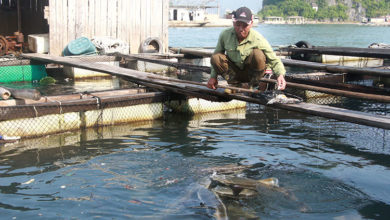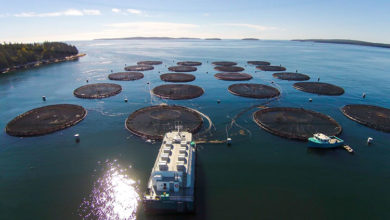

The southern province of An Giang is accelerating the expansion of high-tech, multi-species marine aquaculture as part of its strategy to strengthen the value of the marine economy and transition towards more sustainable production systems.
Diversifying species and scaling up output
Under its marine development roadmap, the province has positioned diversified aquaculture as a key growth driver. In 2026, An Giang aims to produce more than 133,000 tonnes of marine aquaculture products, including around 20,000 tonnes of cage-cultured finfish and over 113,000 tonnes of molluscs. The target signals both capacity expansion and a structural shift towards higher-value species.
Beyond traditional species, the sector is promoting squid, swimming crab, spotted babylon, mantis shrimp, sea urchin and pearl oysters. In the Phu Quoc special administrative zone, pearl production alone is expected to reach approximately 350,000 pearls in 2026, opening opportunities to integrate aquaculture with tourism and broader blue economy initiatives.
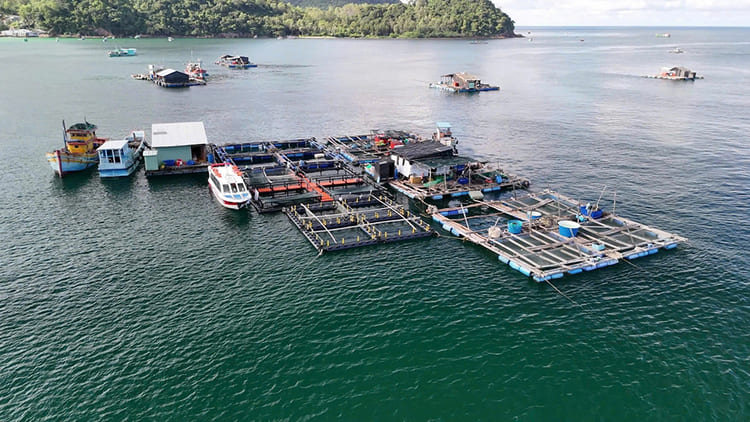
Production areas are being reorganised in line with marine spatial planning, concentrating farming activities in Kien Hai, Phu Quoc, Ha Tien and other coastal zones. Authorities are also encouraging producers to move away from fragmented small-scale operations towards cooperative models and value chain integration, improving cost efficiency and market access. The allocation of designated sea areas to households and enterprises is supporting a gradual shift from capture fisheries to aquaculture, helping to reduce pressure on wild stocks.
Technology and value chain integration drive growth
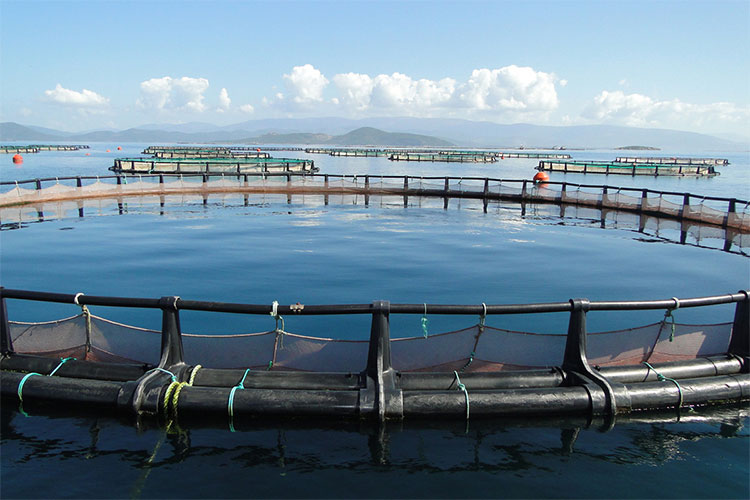
Technology adoption is central to the province’s strategy. Farmers are increasingly deploying HDPE cages, automated environmental monitoring systems, remote surveillance and electronic farm logbooks to improve stock management, reduce disease risks and enhance productivity. The transition from trash fish to formulated feeds is also being promoted to improve environmental performance and resource efficiency.
Extension services and technical training programmes are being expanded to accelerate the uptake of modern farming practices. In 2026, several large enterprises are expected to invest in offshore aquaculture projects, contributing an estimated 20,000 tonnes of marine finfish and significant volumes of seaweed. Companies are engaging across the value chain from seed and feed supply to technical services and product procurement helping to mitigate market risks and strengthen industry professionalism.
Alongside production growth, the province is advancing digital transformation in aquaculture governance, developing integrated databases covering farming areas, output, environmental indicators and disease surveillance. Through its multi-species strategy, An Giang is positioning marine aquaculture as a cornerstone of coastal economic development while laying foundations for long-term sustainable growth.
VFM