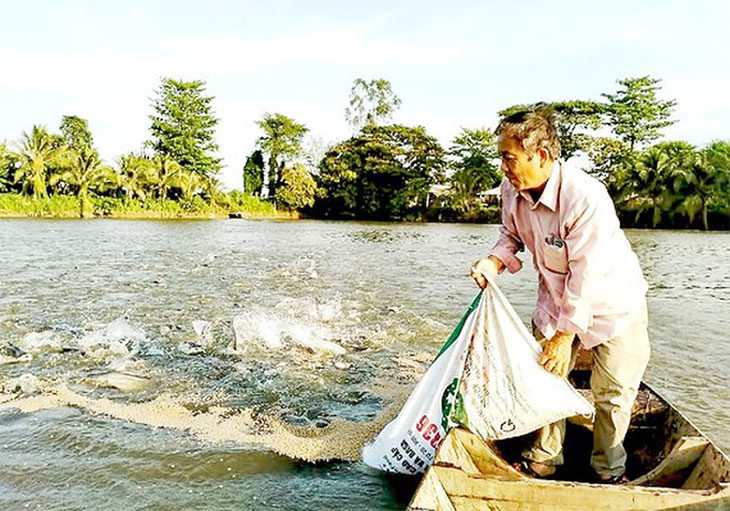

Vietnam’s Mekong Delta is accelerating the adoption of circular economy principles in its pangasius sector, integrating science-driven solutions to improve resource efficiency, reduce environmental pressure and unlock higher value from processing by-products.
By-product valorisation gains traction
Across key production hubs including An Giang, Dong Thap and Can Tho, circular practices are expanding beyond farm-level waste management to encompass the full pangasius value chain. Aquaculture sludge, wastewater and processing residues are increasingly repurposed into organic fertilisers and bio-based inputs, lowering production costs while mitigating environmental discharge.
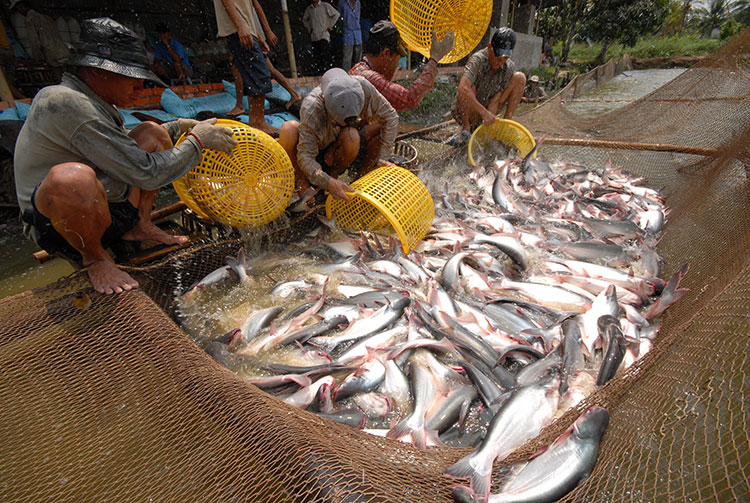
Field trials in An Giang show that treated aquaculture sediment applied to rice paddies can increase yields by 0.9–1 tonne per hectare, while reducing synthetic fertiliser use by approximately 50 percent. Similar applications on taro and vegetable crops have delivered yields of 3.4–3.6 tonnes per hectare, nearly 1 tonne higher than previous seasons, alongside fertiliser cost savings exceeding VND 3 million per crop cycle. Farmers also report improved crop resilience and reduced agrochemical dependency.
The model is now being scaled through cooperatives, with chemical fertiliser inputs cut by 30–40 percent without compromising rice productivity. The approach aligns with broader efforts to reduce nutrient discharge into the Mekong Delta’s waterways, an issue increasingly scrutinised by export markets.
High-tech integration strengthens vertical value chains
At the industrial level, vertically integrated processors are investing in technology to consolidate circular production systems. Vinh Hoan has developed a high-tech, three-tier broodstock and hatchery complex in An Giang spanning over 50 hectares, with an annual capacity of 1.6 billion fry and 30 million fingerlings.
The project incorporates high-standard farming protocols, including prophylactic vaccination at the fingerling stage to reduce antibiotic dependency. Mortalities, sludge and processing by-products are channelled into organic fertiliser production rather than disposed of as waste.
Complementing the hatchery investment, the company operates a 350,000-tonne-per-year aquafeed mill and an organic fertiliser facility, reinforcing vertical integration and raw material efficiency. Farmers participating in the value chain receive technical guidance on standardised production practices, water recirculation systems and sludge reuse, helping to stabilise pond environments and optimise input costs.
Industry stakeholders emphasise that scaling circular pangasius production will depend on stronger public–private collaboration and continued R&D in genetics, farming systems and processing technologies. Increasing recovery rates of by-products for aquafeed ingredients, collagen, gelatin and other bio-based products is viewed as a key driver of margin improvement.
By embedding circular economy principles throughout the supply chain, Vietnam’s pangasius industry is enhancing resource efficiency, lowering emissions intensity and reinforcing its competitive position in global seafood markets, while addressing mounting environmental pressures in the Mekong Delta.
VFM