
Vietnam’s shrimp industry is emerging as a global leader in the adoption of electrical stunning technology, as producers, retailers and welfare organisations work together to improve welfare standards at harvest while meeting growing market expectations in Europe.
The movement has been catalysed by Shrimp Welfare Project’s Humane Slaughter Initiative, which provides electrical stunners to shrimp producers – allowing them to render shrimp unconscious before chill kill, thereby improving animal welfare.
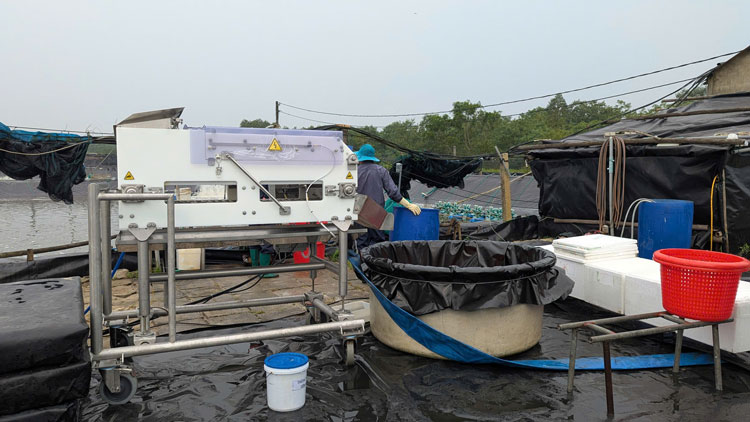
Although still a relatively new concept for much of the global shrimp industry, momentum is building rapidly, particularly in Vietnam, where producers have embraced the technology and are helping to refine both the equipment and the protocols that underpin its use.
A practical approach to improving welfare
The Humane Slaughter Initiative is the welfare-focused charity’s flagship programme.
“It’s focused specifically on helping the shrimp industry move towards more humane slaughter methods,” explains Krzysztof Wojtas, CEO of Shrimp Welfare Project.
“We do that by sponsoring the equipment to eliminate the cost for producers, and we also provide installation, staff training and support in optimising the whole process, both from a welfare perspective and from a quality perspective,” he adds.
The initiative reflects principles that are already well established in terrestrial livestock production and are increasingly common in finfish aquaculture: animals should be rendered unconscious before slaughter, minimising their exposure to pain and distress.
Electrical stunning systems are designed to fit into existing harvest operations, delivering a controlled electric current that rapidly renders shrimp unconscious before they enter the ice slurry that completes the harvest process.
“The stunner is just one step added between taking shrimp out of the water and putting them into ice,” says Wojtas. “If the harvesting process is properly streamlined, it doesn’t disrupt operations and can actually make them calmer because the shrimp are no longer moving or jumping around.”
Rapid growth around the world
The initiative has expanded quickly since its launch in 2023, with Shrimp Welfare Project now working with producers in Latin America, Asia and Africa, as well as with retailers and suppliers in the UK, the EU and North America.
“We have over 30 agreements signed with producers globally, and more than 20 stunners already installed on farms,” Wojtas notes. “For a programme that’s only been running for two or three years, that’s very fast uptake.”
The organisation is active in shrimp producing countries including Ecuador, Honduras, Venezuela, India, Sri Lanka, Indonesia, Thailand and Nigeria. However, Vietnam has emerged as the standout success story.
“In terms of both the number of stunners and the level of engagement from producers, Vietnam is definitely leading,” Wojtas says.
According to Lien Huong Trinh, Shrimp Welfare Project’s director of programme implementation, Taika Seafood was one of the country’s early adopters of electrical stunning, paving the way for others to follow.
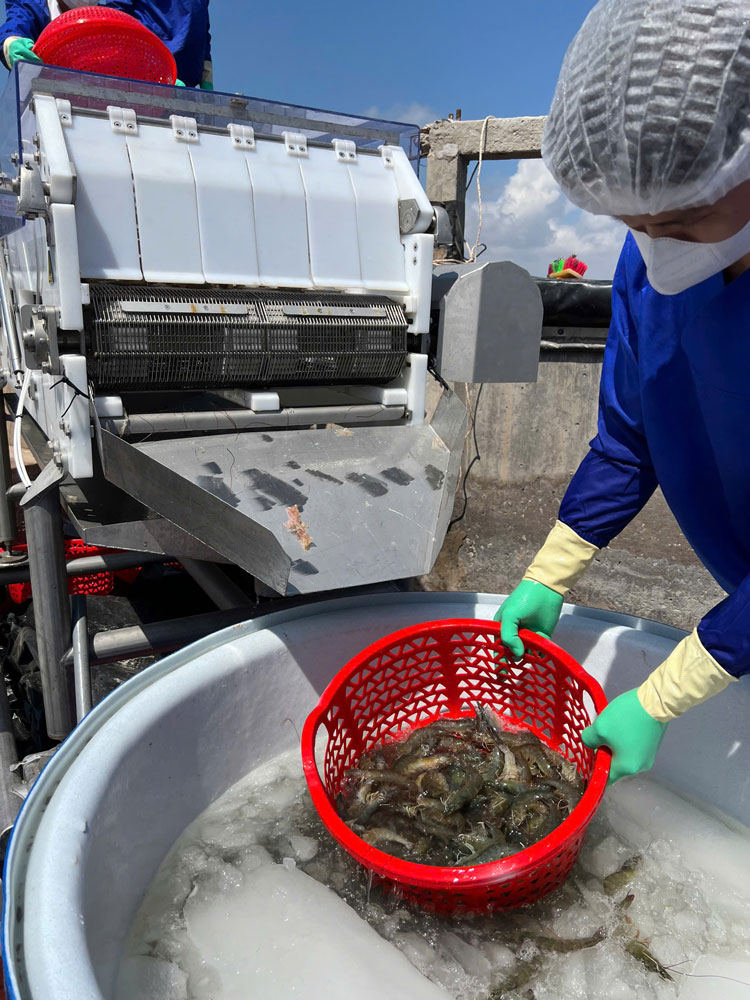
“They were the pioneer in adopting the technology and they’re quite open to sharing the experience, and receiving visitors and researchers. And the founder/CEO of Taika, Mr Do Ngoc Tai, is currently the chairman of the Vietnam Association of Seafood Exporters and Producers, so quite influential,” she explains.
Shrimp Welfare Project currently works with 13 Vietnamese producers – more than a third of all the companies involved in the Humane Slaughter Initiative worldwide. As well as Taika, these include Nha Trang Seafood, Thong Thuan, Thuan Phuoc, Trang Corporation, Camimex, Stapimex, and Seavina, and Trinh points out that the country deserves recognition for embracing shrimp welfare.
“I think Vietnamese producers should be very proud of themselves,” she says. “This is the country where we have the most shrimp stunners in the world. Every farm has its own challenges, but what I see is a real willingness to make the effort, overcome those challenges and come up with solutions instead of giving up.”
Why Vietnam is leading the field
According to Lien Huong, several factors appear to explain Vietnam’s rapid adoption of the technology, including the structure of the industry itself and the fact that many producers target the welfare-conscious European and UK markets.
“In Vietnam you have many mid- to large-sized producers,” she explains. “They form a community, they’re agile, and because they export heavily to Europe and the UK, they’re very exposed to international requirements and trends.”
Infrastructure also plays an important role.
“Vietnamese farms are usually well electrified and have robust infrastructure in place,” Wojtas says. “They’re relatively high tech systems, which often makes it easier to integrate the equipment into harvesting operations.”
Lien Huong believes the industry’s practical mindset is equally important. “Vietnamese producers are extremely pragmatic,” she says. “When a technology is
promising in terms of market access or profitability, they’re willing to adopt it. They ask a lot of questions and take time to make decisions, but – once they commit – they’re very willing to adapt and make it work.”
That openness has also helped the manufacturers of the stunners – namely Optimar and Ace Aquatec – refine their equipment.
“Every time we came back from a farm visit, we had feedback for the manufacturers,” Lien Huong notes. “There have been mechanical and programming updates to make the machines more user-friendly and to improve how shrimp move through the system.”
The impact of retail demand
Growing demand from European retailers is providing an additional incentive for producers to adopt humane slaughter methods.
Will Davies, group CSR manager at Sofina, a global food manufacturing business that includes Young’s Seafood, says electrical stunning is increasingly becoming an expectation within the UK’s premium retail supply chains.
“For pretty much all of UK retail, the market has generally aligned on the requirement to move forward on animal welfare topics, including humane stunning and slaughter processes,” he explains.
Young’s sources the vast majority of its warm-water shrimp from Vietnam and aims to only source electrically stunned farmed shrimp.
“We’ve essentially already achieved it in vannamei,” Davies says.
However, he stresses that market access, not the provision of premium prices, is the main financial benefit for stunning shrimp.
“We’re not offering a premium on the basis of electrical stunning in isolation,” he explains. “We’re offering access to supply the premium UK retail market at a price to reward the farmers for their work on all the requirements, certifications and standards that come with that.”
Electrical stunning also aligns with evolving certification frameworks, including the Aquaculture Stewardship Council (ASC) standards.
“Ultimately, it’s a future target within the ASC farm standard, so we’re encouraging farmers towards early adoption,” Davies adds.
Challenges to overcome
Despite the positive momentum, adopting electrical stunning is not without its challenges. The upfront cost of equipment remains a barrier for some producers, particularly smaller farms. Although Shrimp Welfare Project’s provision of free stunners can help reduce this burden, the initiative is only open to producers producing at least 1,900 tonnes of shrimp a year – making it beyond the reach of small producers.
“There are still lots of small independent producers globally, and not every farm has the infrastructure needed to support large electrical devices,” Davies points out.
For that reason, he believes electrical stunning won’t become universal any time soon.
“It’s extremely unlikely that every single farm in the world will adopt electrical stunners,” he says. “But it will certainly become an important part of many premium supply chains.”
Moreover, operational adjustments to the harvest protocol are often required in order to effectively integrate the stunners.
“At the beginning, it can slow down harvest operations,” says Lien Huong. “Producers have had to introduce more manpower and change how different stages of the harvest process are organised.”
Davies has observed similar issues.
“We’ve had some feedback around it taking slightly longer for harvest times, but we think that improves as the systems become more familiar,” he says. “It’s not just about the equipment itself – it’s the whole process of feeding the machine and handling the shrimp afterwards.”
Building a culture of welfare
For Shrimp Welfare Project, electrical stunning is part of a broader conversation about shrimp welfare.
As Lien Huong explains, the organisation is already exploring additional welfare interventions and hopes to establish research partnerships in Vietnam to strengthen the evidence base around humane harvesting methods. They also encourage producers that join the Humane Slaughter Initiative to stop sourcing post-larvae that come from broodstock that have been through the eyestalk ablation process.
The result is a gradual but significant shift in industry thinking.
“Humane slaughter is still relatively new [to the shrimp sector], but it’s becoming part of a broader culture,” says Lien Huong. “The question now is how we ensure these practices continue to grow and become embedded across the industry.”
With strong producer engagement, support from retailers and a growing body of practical experience, Vietnam appears well positioned to remain at the forefront of that transition.