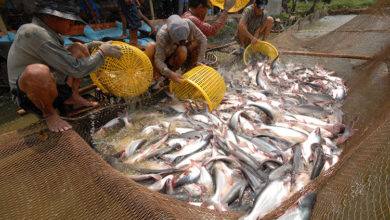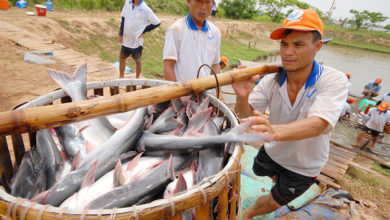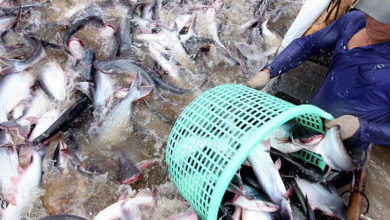

Vietnam’s pangasius sector has entered 2026 with improving fundamentals, supported by firmer raw fish prices and a brighter export outlook. Export turnover for pangasius is forecast to reach around USD 2.3 billion this year.
Amid ongoing volatility in global seafood markets, industry stakeholders say that diversifying export destinations, reducing reliance on major markets and making better use of free trade agreements (FTAs) will be key to sustaining growth and unlocking further expansion.
In the first months of the year, farm-gate prices for pangasius in the Mekong Delta – Vietnam’s main production hub, have climbed to VND 33,000-34,000 (USD 1.30-1.35) per kilogram, significantly higher than the same period last year. The stronger price level has helped farmers restore margins after a prolonged period of high input costs and weak selling prices, while also boosting production confidence in key farming areas.
Despite the recent price recovery, agricultural authorities are urging farmers not to rapidly expand farming areas. A rush to increase production could lead to oversupply in subsequent production cycles, posing risks for both farmers and processors.

Instead, the sector is encouraging producers to follow recommended stocking schedules, manage stocking densities carefully and strengthen value-chain linkages with processing companies to ensure stable market outlets.
Alongside production management, enhancing the value and reputation of Vietnamese pangasius remains a central priority. The industry is increasingly focusing on sustainable value-chain development, including the adoption of advanced technologies and digital tools for farm management, improved traceability systems and stronger compliance with environmental and food safety standards required by importing markets.
In key pangasius-producing provinces such as Dong Thap and An Giang, local authorities are stepping up efforts to support farmers in adopting new technologies, lowering input costs and improving production efficiency.
At the same time, several exporters report that demand from major markets including China, the United States and Europe is beginning to recover, helping underpin domestic raw fish prices.
With a combination of improving market conditions and a stronger push toward sustainable development, Vietnam’s pangasius industry is expected to maintain stable growth momentum through 2026 and beyond.
VFM