
The front lines: Fortifying the global shrimp industry
The global production of Whiteleg shrimp has reached unprecedented levels, driven by intensive farming practices and advanced technologies in recent decades. While this growth has solidified “shrimp” as a cornerstone of the global protein supply, the path to expansion is increasingly obstructed by a complex dual threat: environmental volatility and the relentless emergence of disease.
As traditional management strategies, including the abuse of antibiotics, are pushed to their limits, the industry is experiencing a paradigm shift toward “holistic health” and “long-term sustainability”. Amid intense global debate, stakeholders are moving beyond basic biosecurity and looking toward a “multi-pillar” approach that integrates good genetics, improved seed quality, and innovative nutritional and pharmaceutical solutions.
Central to this evolution is the urgent demand for stable, science-backed feed additives. The industry is no longer satisfied with short-term fixes; instead, there is a clear focus on developing functional supplements that do more than just fight pathogens.
EHP: The silent profit killer
Among the pathogens threatening aquaculture, Enterocytozoon hepatopenaei (EHP) has become a primary driver of financial instability. Unlike acute viruses and bacteria, EHP is a silent profit killer that targets the hepatopancreas and causes structural failure of digestive organs, causing severe growth retardation and high variability in shrimp size. Globally, EHP is estimated to cause billions of dollars in losses annually, particularly in Asia. In Vietnam, where shrimp exports are a pillar of the national economy, EHP-related slow growth and inflated Feed Conversion Ratios (FCR) significantly increase production costs and often make crops unprofitable.
The crisis is further intensified by EHP’s role in the presence of White Feces Disease (WFD) in shrimp ponds. When EHP predisposes shrimp to secondary Vibrio infections, the resulting physiological damage and WFD lead to increased mortality rates that can reach up to 30%. This synergistic relationship severely compromises metabolism and survivability, making EHP one of the most difficult and costly pathogens to manage in modern shrimp farming.
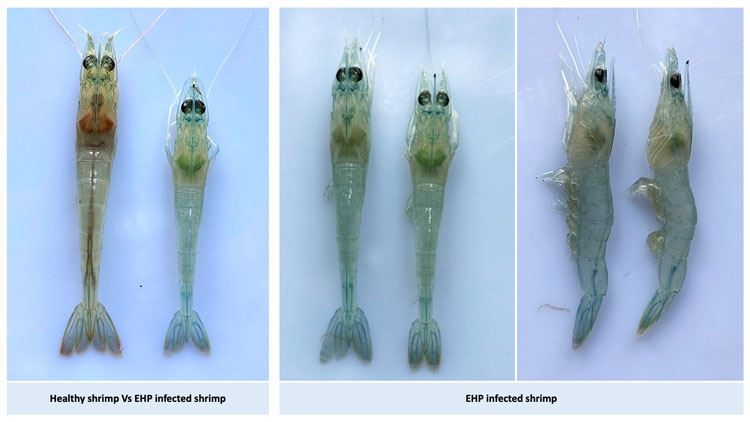
Figure 1. Healthy shrimp vs EHP infected shrimp (pale hepatopancreas, empty stomach, empty gut)
Gallic acid: A new secret weapon for EHP
As the shrimp industry moves away from using harsh chemicals, natural feed additives are becoming the top choice for boosting immunity and fighting disease. This search for reliable and green solutions has turned the spotlight on plant-based (phytogenic) compounds for the future of sustainable shrimp farming.
Gallic acid – a phenolic organic compound found mainly in the form of gallotannins in gallnuts, tea leaves, and various fruits like grapes and pomegranates – has emerged as a powerful antioxidant and antimicrobial agent. While its success in terrestrial livestock is well-documented, its potential in shrimp farming represents a new and promising frontier.
Recognizing this gap, KAO has introduced GA-100 BIO (Gallic Acid powder), a breakthrough solution for sustainable aquaculture. Produced by proprietary microbial fermentation, this sugar-derived gallic acid offers high purity and consistent quality. This innovation is particularly timely for combating challenging pathogens like EHP, which often remain undetected until significant damage occurs. By integrating GA-100 BIO into proactive feeding strategies, farmers can move toward a sustainable production model that leverages bioactive compounds to help protect shrimp from the metabolic disruption associated with EHP.
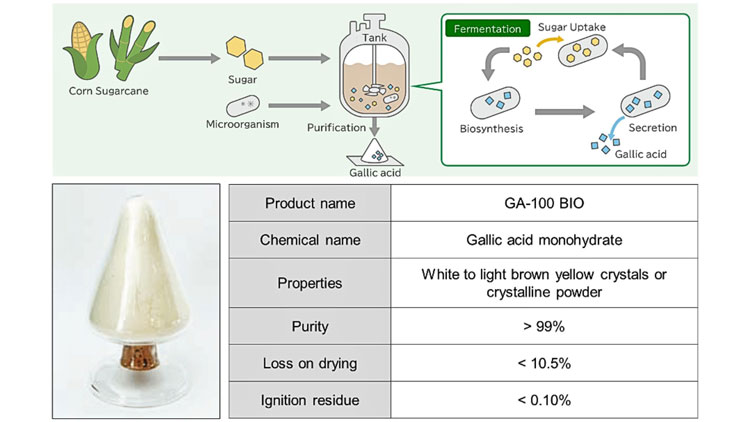
Figure 2. Manufacturing process and properties of GA-100 BIO
How gallic acid stands up to EHP
KAO collaborated with the ShrimpVet Aquaculture Research Institute in Vietnam to see if this new solution could truly stand up to EHP. The goal was simple: to test how the gallic acid-based product, GA-100 BIO, could help whiteleg shrimp survive and grow even when infected with the EHP parasite.
Because EHP is difficult to treat once it becomes established, the research team focused on using the product as a functional feed additive. The gallic acid powder was mixed directly into the shrimp feed at defined inclusion levels to see if “strengthening from the inside” would give the shrimp a fighting chance.
The study was done in 350L tank systems, and juvenile shrimp with an initial body weight of around 1 g were cultured for 50 days. EHP was delivered via the oral route, the most common way EHP spreads in ponds, by feeding the shrimp with pellets coated with EHP-infected fecal material for 7 days.
Survival and resistance: After the infection period, the untreated “Positive Control” group showed classic EHP symptoms, including empty guts, soft shells, and pale hepatopancreas tissues. However, the groups fed with GA-100 BIO showed a markedly better outcome. By the end of the 28-day post-infection period, shrimp fed with GA-100 BIO at 2.0% inclusion achieved a survival rate above 80%, significantly outperforming the untreated group.
Growth performance: The most exciting results were observed in growth and size uniformity. EHP is well known for causing size variation, but GA-100 BIO helped mitigate this effect by:
- Superior weight gain: Shrimp fed with 0% GA-100 BIO showed the best final weight and biomass.
- Improved feed efficiency: These shrimp exhibited significantly lower Feed Conversion Ratios (both economic and biological FCR), indicating more efficient conversion of feed into biomass despite EHP infection.
- More uniform size: While untreated shrimp grew at irregular rates, the GA-100 BIO groups (0.5% and 2.0%) maintained a lower Coefficient of Variation (CV), indicating more consistent growth, a critical factor for harvest value.
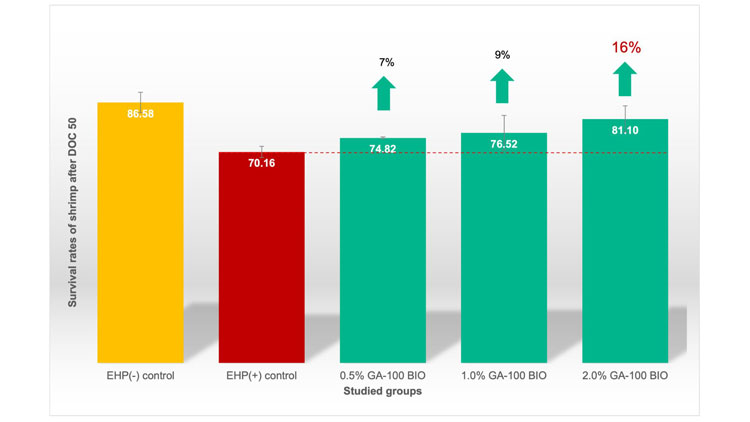
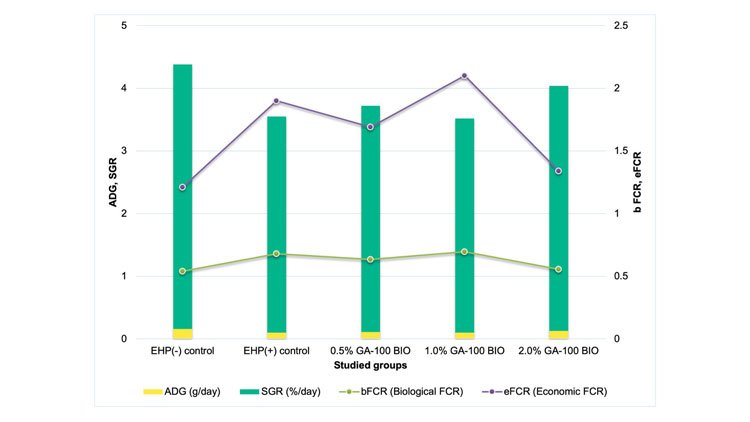
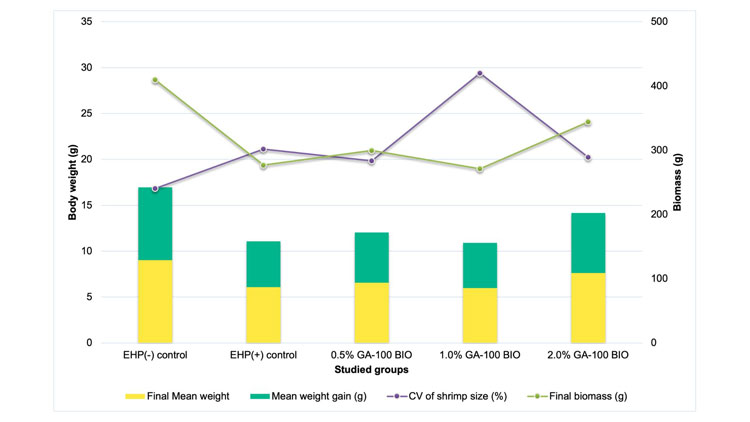
Figure 3. Shrimp performance (Survival, weight gain, Biomass gain, ADG, SGR, FCR) in the EHP challenge study with GA-100 BIO supplementation
Fighting the infection: When the hepatopancreas samples were checked by qPCR to determine the impact of the GA-100 BIO supplementation on pathogen levels, the results showed that GA-100 BIO at 2.0% effectively suppressed EHP replication, maintaining the EHP load at a significantly lower intensity of approximately 10^6 copies/g compared to the untreated control, which reached nearly 10^8 copies/g.
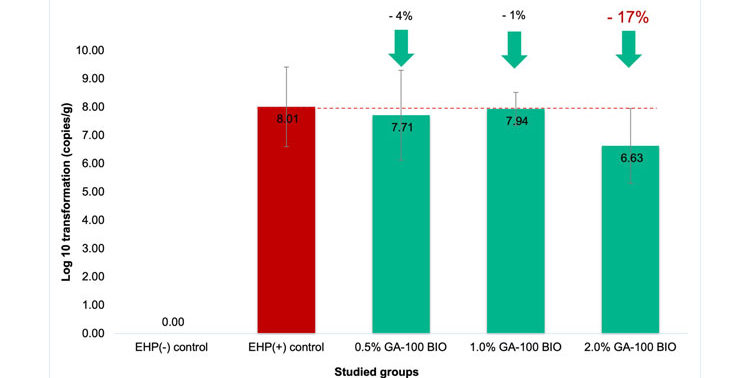
Figure 4. EHP load in the hepatopancreas by quantitative PCR (qPCR) on day 28 of post-infection.
How to use these findings on your farm today
Our study demonstrates that gallic acid provides a dual advantage by boosting shrimp growth performance while helping to build a biological shield against EHP infection. For producers, switching to these science-backed supplements can translate into higher economic returns through faster growth, better survival, and more uniform harvests.
While this research marks a significant milestone, the industry must continue exploring dietary innovations to stay ahead of evolving pathogens. Now is the time to transition from reactive management strategies to proactive, sustainable nutrition.
KAO
Ready to protect your crop?
Contact us today to discuss incorporating GA-100 BIO into your next production cycle.
Kao Vietnam Co., Ltd.
Room 10.1-10.2, E-town 2 Building, 364 Cong Hoa, Tan Binh Ward, Ho Chi Minh City.
Customer inbox: tuvankhachhang@kaovn.com.vn
Phone number: + 84 (28) 3810 9099
Cell phone hotline: +84 901670731 – Mr. Le Viet Lam Anh
https://www.kao.com/vn/support.