
A spirulina cultivation facility using microbial technology has begun operations in Bao Loc city in Vietnam’s Central Highlands, with output expected to reach 600 tonnes of fresh algae a year once fully operational, project developers said.
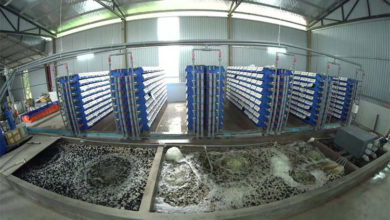
The facility is jointly developed by the ASEAN Institute of Agricultural Science and Technology and private-sector partners, operating under a centralized, closed-loop production model. Cultivation conditions, including water quality, light, temperature and microbial environments, are tightly controlled to meet standards for downstream processing.
Bao Loc was selected for the project due to its mild climate and favourable ecological conditions, as well as local policies promoting high-tech agriculture, the institute said.
Hoang Trong Nguyen, head of the ASEAN Institute of Agricultural Science and Technology, said the application of microbial technology helps reduce water consumption, limit emissions and minimise environmental impacts. The project aims to scale up production while building a sustainable value chain linking scientific research with commercial application, he added.
US Vietnam Algae Technology JSC, one of the investors, said the Bao Loc facility is about 20 times larger than its existing spirulina model in Hanoi. At full capacity, it is expected to supply fresh spirulina for use in food, nutrition and health-care products.
The project is being implemented in two phases. Phase one, which has been completed, has an annual capacity of 240 tonnes. Phase two, scheduled for completion in May 2026, will add another 360 tonnes a year and target both domestic and export markets.
Agricultural experts say the high-tech spirulina project reflects Vietnam’s efforts to develop greener, higher-value agricultural production models.
VFM