
A two-phase shrimp farming model is being implemented in southern riverside communes of Quang Tri province, opening a new direction for sustainable aquaculture and climate-resilient shrimp production.
According to Phan Van Phuong, Deputy Director of the Quang Tri Provincial Agricultural Extension Center, the Center supported two farming households in Vinh Thuy and Trieu Binh communes in 2025 to pilot the two-phase shrimp farming model. The initiative aims to encourage farmers to shift toward biosecure production systems, reduce disease risks, and develop farming protocols tailored to local environmental conditions.
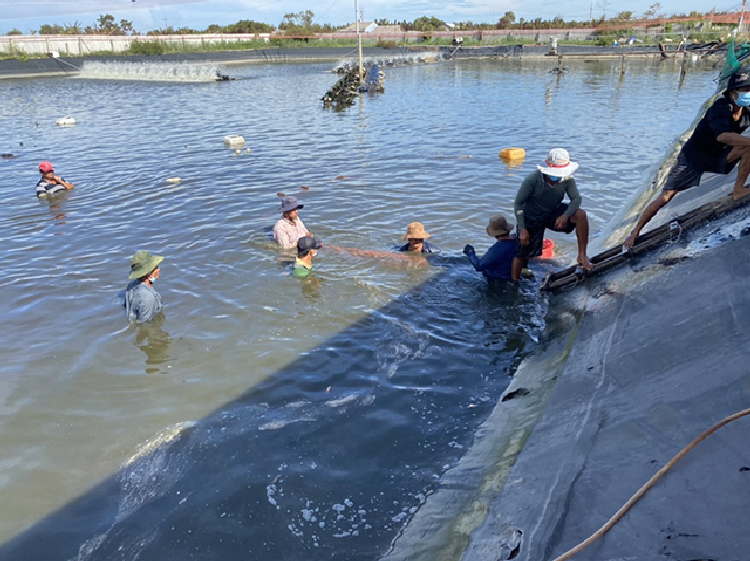
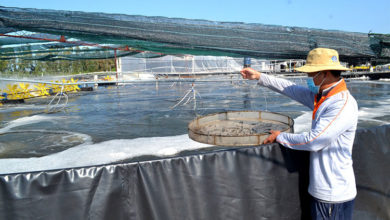
In Vinh Thuy commune, farmer Tran Van Dung, one of the two participants, has constructed a system of water storage and sedimentation ponds, including a 300 m² nursery pond and a 2,500 m² grow-out pond, both equipped with shading nets and paddlewheel aerators. Incoming water is treated through multiple stages using potassium permanganate, chlorine, and disinfectants before being introduced into the ponds. Postlarvae are sourced from certified hatcheries to ensure disease-free stock.
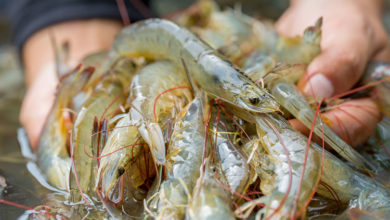
In the first phase, Dung stocked 500,000 whiteleg shrimp postlarvae in the nursery pond. After around 21 days, when shrimp reached approximately 1,500 PLs per kg, they were transferred to the grow-out pond (phase 2). To optimize efficiency, Dung uses automatic feeders, probiotics to stabilize water quality, and a bottom-siphoning system that replaces about 20 percent of the water volume each time. After four months of culture, the shrimp reached an average size of 39 pieces per kg, yielding over 10.25 tonnes and generating a net profit exceeding VND 850 million.
According to Dung, the two-phase approach allows for better disease control, higher survival rates, shorter grow-out time, and improved productivity. “Post-nursery shrimp are healthier and more uniform in size, reducing cross-infection risks,” he noted.
“Despite prolonged heat waves and erratic rainfall, thanks to proactive water management and shading nets, shrimp growth remained stable,” Dung added.
Phan Van Phuong emphasized that for the model to succeed, farmers must strictly follow technical procedures, particularly pond preparation, water treatment, and environmental management. Given the high stocking densities and fluctuating weather conditions, it is essential to regularly apply probiotics, minerals, and digestive enzyme supplements to maintain optimal pond conditions.
“The two-phase shrimp farming system has demonstrated clear advantages and offers a sustainable development pathway for shrimp farmers in Quang Tri’s riverside zones,” Phuong affirmed.
VFM