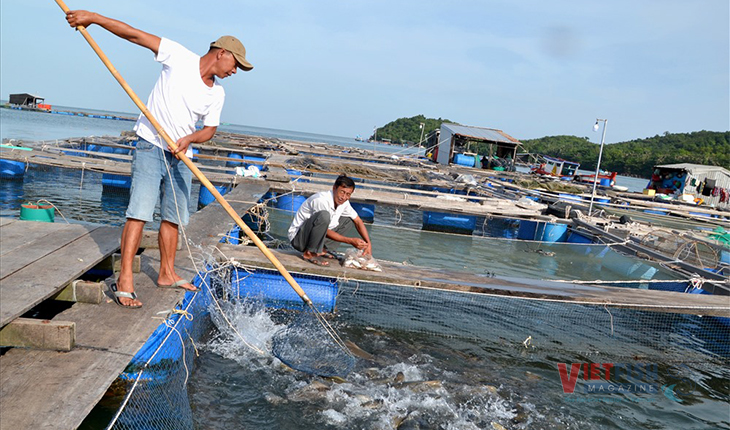

Ca Mau expands circular shrimp farming model to 1,500 hectares
Authorities in the southernmost province of Ca Mau on Thursday signed an agreement with De Heus Vietnam and partners to scale up a circular shrimp farming model to 1,500 hectares, following a successful 100-hectare pilot.

The next phase will apply the super-intensive whiteleg shrimp farming system using recirculating aquaculture and integrated multi-trophic aquaculture (RAS-IMTA) technology, which requires little water exchange and ensures biosecurity. De Heus will directly develop 1,000 hectares, while seafood giant Minh Phu Group will manage 500 hectares.
The project targets shrimp farms certified under international standards such as ASC and BAP, with products bound for high-end markets in the European Union, the United States and Japan.
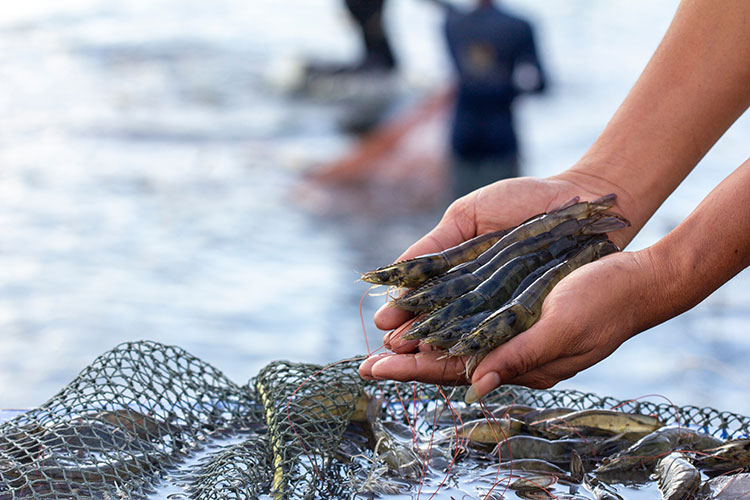
According to Ca Mau’s Department of Science and Technology, the pilot achieved survival rates of 85-90%, yields of 40-50 tonnes per hectare per crop, and stocking densities of 250-300 shrimp per square metre. Treated wastewater met national standards, carbon emissions fell below 5 kg per kilo of shrimp produced, and the products secured ASC and BAP certification.
De Heus said it would provide high-quality feed, on-site technical support, and guidance for farmers transitioning to circular water treatment systems, while also linking farmers with banks, cooperatives and processors to access green credit and secure stable markets.
Deputy Chairman of Ca Mau People’s Committee Le Van Su called the expansion “a strategic step” that would both drive economic growth and underline the province’s role as a pioneer in sustainable shrimp farming. He instructed provincial departments to finalise detailed plans within 15 days, establish green credit packages with commercial banks, and prepare new environmental regulations for shrimp farming by 2025.
Su urged De Heus, Minh Phu and other core businesses to treat the project as a political and social commitment. “The success of this project will be a measure of the responsibility, capacity and reputation of each enterprise and of the province itself. I ask all parties to act immediately and decisively, without delay or avoidance,” he said.
Johan Van Den Ban, General Director of De Heus Vietnam and Asia, said the initiative would help Ca Mau build internationally recognised shrimp farming zones while aligning with De Heus’s global commitments to reduce greenhouse gas emissions, use sustainable raw materials and strengthen supply chain transparency.
Nguyen Nhut, a researcher at the Research Institute for Aquaculture II and author of the RAS-IMTA model, said future efforts should also focus on producing low-carbon shrimp to meet tightening environmental standards in the EU, U.S. and Japan. He suggested developing model farms with multiple international certifications, such as ASC, BAP and GlobalGAP, to anchor wider expansion.
VFM