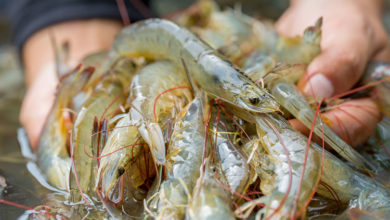

As Vietnam’s leading shrimp seed hub, Khanh Hoa supplies more than 30 percent of the country’s shrimp postlarvae. However, ageing infrastructure, environmental pressure and dependence on imported broodstock are testing the long-term sustainability of the sector.
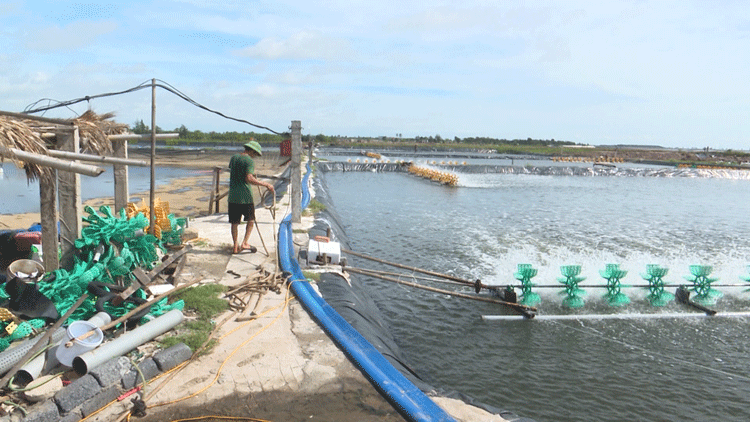
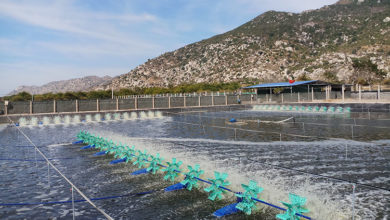
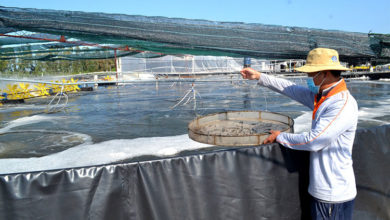
Mornings at the An Hai high-tech aquatic seed production zone in Khanh Hoa province begin with the steady hum of aerators running through long rows of hatcheries. Beneath sun-worn roofs shaped by years of coastal exposure, millions of shrimp larvae are being reared daily, supporting livelihoods across Vietnam’s south-central coastline.
Few outside the industry realise that these compact rearing systems underpin one of the country’s most important aquaculture supply chains. Over several decades, Khanh Hoa has established itself as Vietnam’s leading centre for shrimp seed production, supplying farmers nationwide and anchoring the early stages of the shrimp value chain.
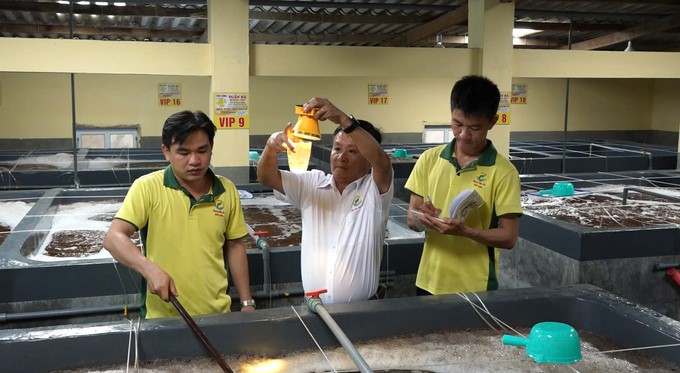
“The Khanh Hoa shrimp seed brand did not emerge by chance,” says Le Van Que, chairman of the Khanh Hoa Aquatic Seed Association. “It is built on long-term experience, strict production discipline and consistent trust from farmers.”
From small hatcheries to a national hub
Shrimp seed production in southern Khanh Hoa began more than 30 years ago with small, family-operated coastal hatcheries. Producers learned largely through trial and error, absorbing early losses while gradually refining techniques. Over time, quality improvements helped establish confidence in locally produced seed.
Persistent investment and industry consolidation have since transformed the region into Vietnam’s primary shrimp hatchery hub. Today, production is concentrated in two major planned zones – An Hai (Phuoc Dinh commune) and Nhon Hai (Vinh Hai commune), which covering more than 300 hectares and hosting over 500 hatcheries. Combined production capacity is estimated at around 50 billion shrimp postlarvae annually, with participation from both domestic and international companies.
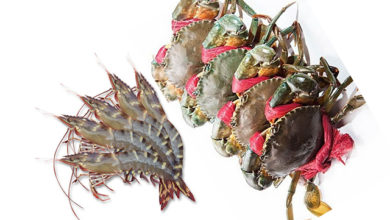
Despite continued market volatility and rising input costs, the sector demonstrated resilience in 2025. Khanh Hoa’s brackishwater shrimp seed output increased by 11.2 percent compared with the previous year, accounting for more than 31 percent of Vietnam’s total shrimp seed demand. The province produced over 9.13 billion black tiger shrimp postlarvae, representing 18.6 percent of national output, and 40.85 billion whiteleg shrimp postlarvae, equivalent to 36.8 percent of the country’s total.
According to fisheries authorities, quality control remains the cornerstone of Khanh Hoa’s competitive advantage. Regulations are strictly enforced throughout the production chain, including broodstock import procedures, hatchery certification, feed management, water treatment inputs and routine environmental monitoring. This regulatory discipline has reinforced the province’s reputation for reliable seed quality rather than volume alone.
Infrastructure and environmental constraints
However, growth has brought mounting pressure. Many hatcheries in the An Hai zone have been operating for more than two decades, and infrastructure deterioration is increasingly evident. In Nhon Hai, incomplete investment in roads, water supply, drainage and wastewater treatment has created operational bottlenecks and heightened production risks.
Environmental management poses an even greater challenge. Along the coastline adjacent to shrimp hatchery clusters, numerous spotted babylon snail hatcheries and grow-out operations are reported to be discharging untreated effluent directly into the marine environment. Such practices degrade coastal water quality in areas where shrimp hatcheries are particularly vulnerable to environmental fluctuations and pathogen exposure.
Further offshore, hundreds of marine cages farming various fish species contribute to nutrient loading from live feeds, increasing the background risk of disease outbreaks. For hatchery operators, whose systems rely on stable and clean water, these cumulative pressures represent a growing threat to biosecurity.
Another structural vulnerability lies in broodstock supply. Although Khanh Hoa has been designated Vietnam’s national aquatic seed production centre through to 2030, with a longer-term vision extending to 2045, the industry remains heavily dependent on imported shrimp broodstock. This reliance exposes producers to volatile prices and supply uncertainty. Several companies are pursuing domestication and selective breeding of locally branded broodstock, but progress remains constrained by technical complexity and regulatory hurdles.
Le Van Que notes that only about 10 percent of hatcheries operate at a scale large enough to influence market dynamics. The majority remain small and seasonal, perpetuating cycles of oversupply followed by sharp price declines. Without structural reforms, he warns, long-term sustainability will remain elusive.
Strengthening the foundation
Provincial fisheries authorities have set ambitious targets for the coming decade. By 2030, Khanh Hoa aims to produce more than 60 billion shrimp postlarvae annually, while achieving self-sufficiency in 60 percent of whiteleg shrimp and 80 percent of black tiger shrimp domesticated broodstock.
Central to this strategy is investment in broodstock research, domestication and selective breeding programmes focusing on growth performance, disease resistance and genetic stability. Reducing dependence on imported broodstock is seen as critical to enhancing competitiveness and resilience across the shrimp value chain.
At the governance level, provincial authorities are prioritising three core pillars: developing domestic broodstock capacity, strengthening regulatory enforcement and applying rigorous biosecurity standards. Hatcheries are encouraged to adopt certified disease-free production models, tighten control over water sources and operate rotational production schedules across isolated sub-zones to disrupt disease transmission pathways.
Amid rows of hatchery tanks shimmering under the coastal sun, millions of shrimp larvae continue to be nurtured each day. Yet preserving Khanh Hoa’s position as Vietnam’s shrimp seed heartland will require more than maintaining current output. Long-term success will depend on coordinated investment in infrastructure, environmental management, spatial planning and broodstock development, ensuring that growth today does not compromise sustainability tomorrow.
VFM