
Da Nang is accelerating efforts to modernize its fishing fleet and expand fisheries logistics infrastructure as part of a broader strategy to build a sustainable seafood sector and help remove the European Union’s “yellow card” warning on illegal, unreported and unregulated (IUU) fishing.
Fleet modernization targets offshore fishing
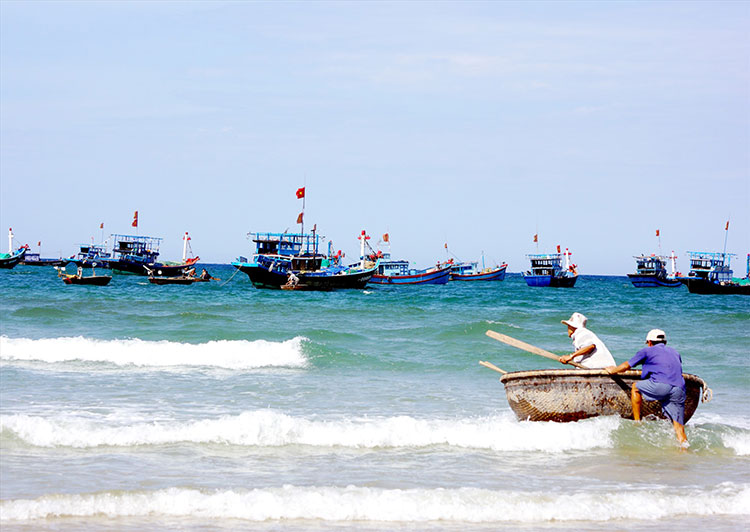
The central Vietnamese city of Da Nang currently operates about 4,045 fishing vessels. As part of its campaign to combat IUU fishing, all vessels measuring 15 meters or longer have installed vessel monitoring systems (VMS), while the entire fleet has been registered, marked with identification numbers and integrated into Vietnam’s national fisheries database.
Despite the sizeable fleet, many vessels remain small and operate mainly in coastal waters. Authorities are therefore encouraging the gradual reduction of nearshore vessels while promoting the construction and upgrading of larger boats equipped with modern navigation, fish-finding and onboard preservation systems. The shift aims to improve catch traceability, enhance fishing efficiency and ensure compliance with international regulations.
At a recent special session, the Da Nang People’s Council approved a fisheries development support program for 2026-2030. Under the policy, fishing vessels 15 meters and longer will receive an additional 40% subsidy for annual hull insurance on top of the 50% support provided by the central government. The city will also subsidize 50% of the cost of installing vessel monitoring equipment and part of the associated service fees.
Boat owners are also eligible for financial assistance to purchase marine engines, fishing gear or upgrade vessels, with support capped at 50 million Vietnamese dong (about USD 2,000) per vessel.
Ngô Văn Hạ, captain of a long-distance squid fishing vessel operating in the traditional Hoàng Sa fishing grounds, said the support policies have boosted fishermen’s confidence to continue offshore operations by easing operational costs.
Another vessel owner, Tran Dinh Len, said his family invested more than 400 million dong to upgrade their fishing boat, install monitoring equipment and purchase insurance for 40 crew members. Additional government support would allow further investment in fishing gear and onboard storage systems, he said.
Fisheries logistics infrastructure expands
Alongside fleet restructuring, Da Nang has stepped up investment in fisheries logistics facilities. Several fishing ports, including Hong Trieu, Tho Quang and Tam Quang, have recently been upgraded and reopened, providing better access to fuel supplies, food provisions and post-harvest services.
Fisherman Le Viet Quang said the expansion of Tam Quang port has made unloading and selling seafood more convenient while improving access to support services, helping fishermen reduce costs and increase crew income.
Le Minh Tri, owner of the 900-horsepower fishing vessel QNa 91078 TS, said modern fish-finding equipment and improved onboard storage, combined with faster product handling at ports, helped ensure catch quality and boosted earnings. Crew members on his vessel earned an average of about 18 million dong (USD 720) per month in 2025, he said.
Meanwhile, construction of the An Hoa storm shelter and fishing port is being accelerated. Once completed, the facility is expected to accommodate more than 500 fishing vessels.
Together with major ports such as Hong Trieu, Tho Quang and Tam Quang, the new infrastructure is expected to strengthen Da Nang’s fisheries logistics network, shorten landing times and reduce operating costs, supporting the transition toward a modern and sustainable fishing industry.
VFM