
Vietnamese seafood exporters are facing rising logistics costs as escalating tensions in the Middle East disrupt shipping routes, drive up freight and insurance charges, and force companies to reassess delivery schedules and market strategies.
Freight rates double
The recent escalation of conflict in the Middle East has sent ripples through global shipping markets. Major container lines including Maersk, Hapag-Lloyd, CMA CGM and MSC Mediterranean Shipping Company have suspended cargo bookings to several ports in the Gulf while introducing war-risk surcharges on shipments passing through high-risk waters.
As vessels reroute to avoid conflict zones, transit times on some routes have extended by 7-14 days. The diversions are reducing fleet utilisation and slowing container turnaround, increasing the risk of equipment shortages, particularly refrigerated containers used for frozen seafood.
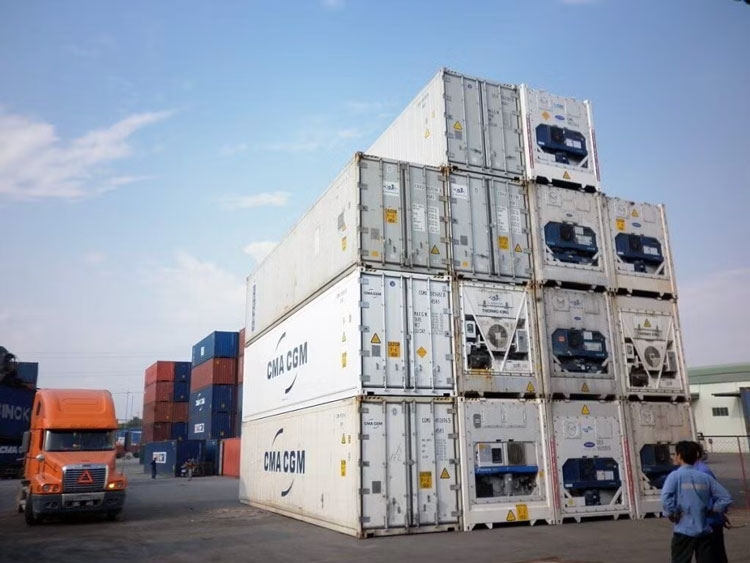
Freight rates on the Asia-Dubai route have nearly doubled within days, according to logistics market sources. Emergency surcharges for shipments to and from Gulf destinations now range from USD 1,500 to USD 4,000 per container, with refrigerated units typically facing higher fees.
At the same time, several maritime insurers and war-risk underwriters have tightened coverage for vessels operating in the Persian Gulf, adding further pressure to shipping costs.
An executive at Minh Phu Seafood Corporation said the tensions were already pushing up logistics expenses for shrimp shipments to the Middle East and some routes to Europe.
The region accounts for a relatively small share of Minh Phu’s exports but remains a stable market for frozen shrimp, particularly in the United Arab Emirates, Saudi Arabia and Qatar. Most shipments are transshipped through Jebel Ali Portbefore being distributed to neighbouring markets.
“In recent days, as tensions around the Strait of Hormuz intensified, shipping lines have imposed war-risk surcharges and adjusted sailing schedules on several Gulf routes,” the company representative said. “That has increased the cost of refrigerated containers by several hundred dollars per unit.”
Exporters are now negotiating with import partners to adjust delivery timelines and share the additional logistics costs, the executive added.
Mounting costs
A representative from Hai Son Food Company said the company had expanded its Middle East business in recent years, supplying canned and processed tuna to retail chains and restaurant groups in the UAE, Israel and several North African markets.
However, the conflict has begun to cause localized shortages of refrigerated containers on some shipping routes as vessels adjust itineraries to avoid areas considered security risks.
“For frozen products, a delay of one to two weeks can trigger a range of additional costs, including container detention, cold storage and higher financing expenses,” the company representative said.
“With seafood industry margins typically around 5-7%, even a modest increase in logistics costs can significantly affect profitability.”
According to the Vietnam Association of Seafood Exporters and Producers (VASEP), Vietnam’s seafood exports reached about USD 11.3 billion in 2025, up roughly 13% from 2024 and marking a record high for the industry after a previous downturn.
Exports to the Middle East totalled around USD 401 million, up about 9.6% year-on-year. Pangasius accounted for the largest share at roughly USD 176 million, followed by shrimp and higher-value wild-caught seafood.
Although the Middle East represents only about 3-4% of Vietnam’s total seafood export value, the region is seen as a promising market thanks to strong seafood demand across Gulf countries, particularly in the restaurant, hotel and premium retail segments.
VASEP said seafood exports require strict cold-chain conditions and stable transit times. When shipping routes are disrupted, logistics costs rise and risks to product quality increase.
If geopolitical tensions persist, shipping diversions, war-risk surcharges and tighter insurance coverage could keep logistics costs elevated for months. That may force exporters to adjust strategies, diversify markets and seek alternative shipping routes.
Amid growing uncertainty in global trade, VASEP said stronger logistics risk management is becoming critical for the seafood industry. Companies are increasingly securing long-term freight contracts, diversifying shipping routes and closely monitoring maritime insurance markets to maintain stable export flows.
VFM