
Vietnam eyes global tilapia push as Brazil market reopens
Prime Minister Pham Minh Chinh’s July visit to Brazil has opened new opportunities for Vietnam’s seafood sector, particularly tilapia, as the South American market moves to lift a suspension linked to Tilapia Lake Virus (TiLV). The reopening comes amid rising global demand, potentially boosting Vietnam’s profile in the trade.

The global tilapia market was valued at USD 10.6 billion in 2024 and is forecast to reach USD 14.5 billion by 2033, growing at 3.52% annually, according to the Vietnam Association of Seafood Exporters and Producers (VASEP). The United States is the largest buyer, importing around 200,000 tonnes a year. Shipments from China have slowed due to tariffs and trade barriers, creating a supply gap.
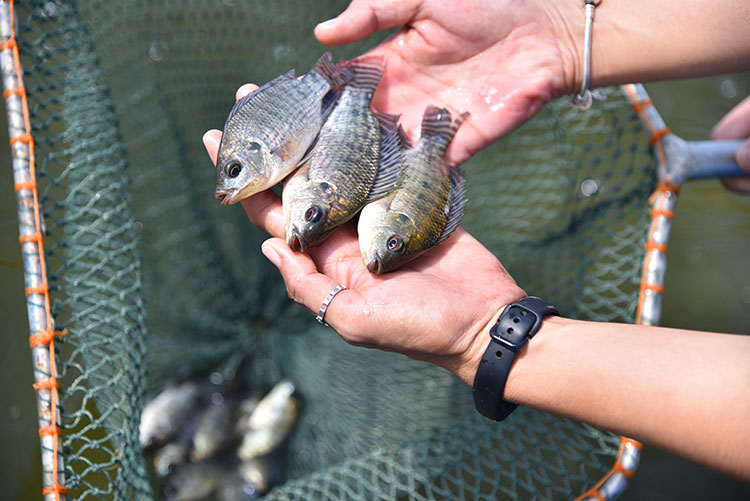
Vietnam’s tilapia exports rose 138% in 2024 to USD 41 million, VASEP data showed. Sales to the U.S. reached USD 19 million, nearly seven times higher than a year earlier. In the first quarter of 2025, exports totalled almost USD 14 million, with the U.S. taking 46%, followed by Russia, the Middle East, Japan and Belgium.
VASEP Secretary General Nguyen Hoai Nam said the growth reflects a shift towards species with short grow-out cycles, low costs and high adaptability. Tank-based farming has improved yields and reduced disease risk, while tilapia’s competitive price and processing flexibility allow it to serve both premium and mass markets.
Vietnam’s 30,000 hectares of tilapia farms produce about 300,000 tonnes annually. The government aims to expand this to 40,000 hectares and 400,000 tonnes by 2030, improve seed quality and increase the share of high-value processed products.
Challenges include uneven seed quality, inbreeding, low fillet yields of about 33% and disease outbreaks such as TiLV. Reliance on imported feed raises costs, while infrastructure remains fragmented. The U.S. and EU also require strict standards for food safety, traceability and sustainability certification.
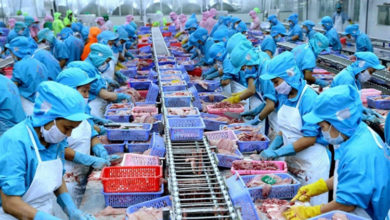
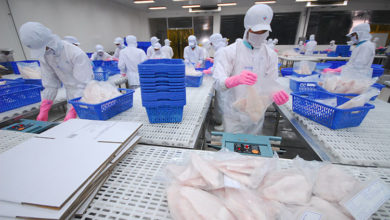
Nguyen The Anh, head of the aquaculture division at the Fisheries Directorate, said Vietnam should expand industrial-scale farming and integrate value chains from broodstock and feed to processing and sales. The country has about 510 processing facilities eligible for export, but more investment is needed in automated filleting and value-added products such as smoked fish and snacks.
Adopting certifications such as ASC and BAP, building transparent supply chains and using blockchain-based traceability could boost market access, he said. Partnerships with domestic feed producers could also cut costs by about 15%.
Exporters are being urged to step up trade promotion, attend major seafood fairs in the U.S., Japan, the EU and Middle East, and use free trade agreements such as the EVFTA, RCEP and ASEAN-China pact to lower tariffs and expand market share.
Fisheries Directorate head Tran Dinh Luan said diversifying species and farming methods could enhance competitiveness. Tilapia, he added, is suitable for large-scale development and can be integrated with brackish-water shrimp farming to improve product quality and help control shrimp diseases, an advantage amid climate change, sea-level rise and saltwater intrusion.
Partnerships between businesses, farmers and research institutions could help turn tilapia into a key pillar of Vietnam’s seafood industry, he said.
VFM