
Vietnam’s seafood industry is setting up for a stronger-than-expected rebound in 2025, with several key categories holding firm despite global market turbulence. Full-year revenue could reach USD 11 billion if current momentum extends through Q4.
According to VASEP, Vietnam exported more than USD 9.5 billion worth of seafood in the first 10 months of 2024, up 15% year on year, marking a solid result given shifting trade policies in major markets, particularly the US. Growth moderated in Q3 as Washington’s reciprocal tariffs took effect, but several product groups continued to expand, supporting a positive 2025 outlook.
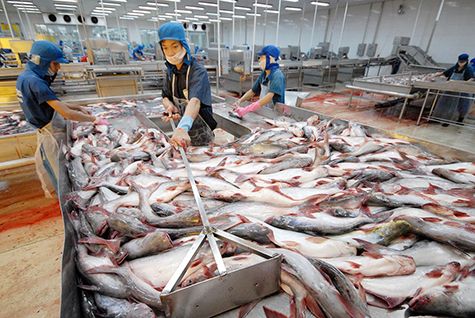
Shrimp remained the sector’s backbone, reaching USD 3.9 billion in January-October. Lobster was the standout performer, surging 134% to USD 712 million on robust demand from China and Hong Kong, especially for live shipments to the HORECA channel. Pangasius followed with nearly USD 1.8 billion in sales. Tilapia increasingly showed potential as Vietnam’s next strategic species, jumping 220% to USD 62 million. Tuna slipped nearly 4% due to raw material shortages and shipping disruptions in the Middle East, while squid and octopus rebounded to USD 627 million. Surimi and fish paste rose 24% to USD 291 million.
China remains the growth driver
China and Hong Kong continued to anchor Vietnam’s recovery, with imports surpassing USD 2 billion, up 32%, supported by strong demand for lobster, live marine fish and live crab ahead of the year-end season.
In the US, imports reached USD 1.66 billion over 10 months, but the downtrend deepened from Q3 after the 20% retaliatory tariff imposed in August. Shrimp and pangasius, Vietnam’s two core species, both declined as exporters deliberately reduced volumes. Longer-term risks include anti-dumping duties and strict MMPA requirements due in 2026.
Japan posted a steady recovery with USD 1.45 billion in imports, while the EU reached USD 985 million as several technical barriers on farmed products eased.
Prospects and headwinds for 2026
The global frozen shrimp market is projected to rise from USD 18.7 billion in 2025 to USD 32.8 billion by 2035, expanding more than 75%. Rising demand for convenience seafood and deeper processing gives Vietnam room to upgrade its value chain. But Minh Phu chairman Le Van Quang warns that weak production-area planning and persistent disease issues continue to push Vietnam’s farming costs above those of India and Ecuador. Addressing these structural constraints would significantly improve competitiveness.
For pangasius, China will remain the leading destination thanks to predictable demand and logistical advantages. In the EU, ongoing whitefish shortages provide additional room for growth. Tilapia is also emerging as a promising new segment if Vietnam commits to consistent investment across farming, processing and branding.
The tuna sector is expected to stabilise following Decree 309/2025, which temporarily lifts minimum harvest-size rules for several species. The policy is widely viewed as a meaningful step to ease supply constraints for fishing and processing companies.
Still, the 2026 landscape looks challenging. Prolonged US retaliatory tariffs, the approaching MMPA deadline, the possibility of the EU retaining its IUU yellow card, and intensifying competition from India, Ecuador and Indonesia will test Vietnam’s resilience. Exporters will need to recalibrate market strategies, expand value-added portfolios, invest in technology and strengthen sustainability standards to protect long-term growth.
VFM