
The suspension of Vietnam’s minimum-size requirement for skipjack tuna has effectively “unshackled” the fishery, bringing renewed stability and optimism to coastal communities in central Vietnam.
Coastal fishers breathe easier
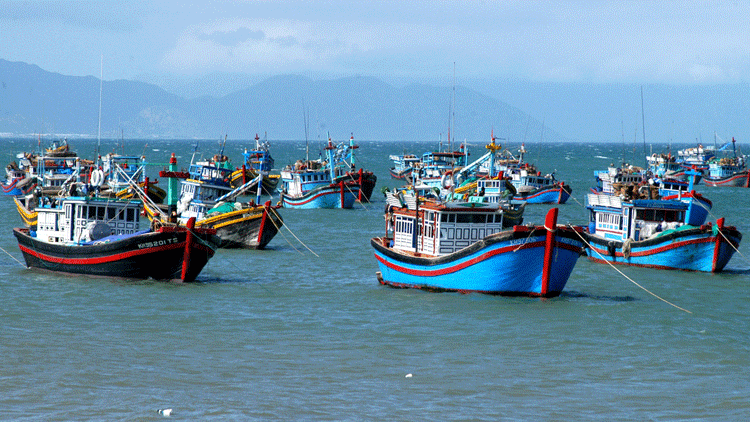
The eastern area of Gia Lai currently deploys nearly 3,200 vessels of 15 metres or longer, including more than 1,400 longliners targeting yellowfin and bigeye tuna, and 1,302 purse seiners focused on skipjack, the species that underpins the local economy.
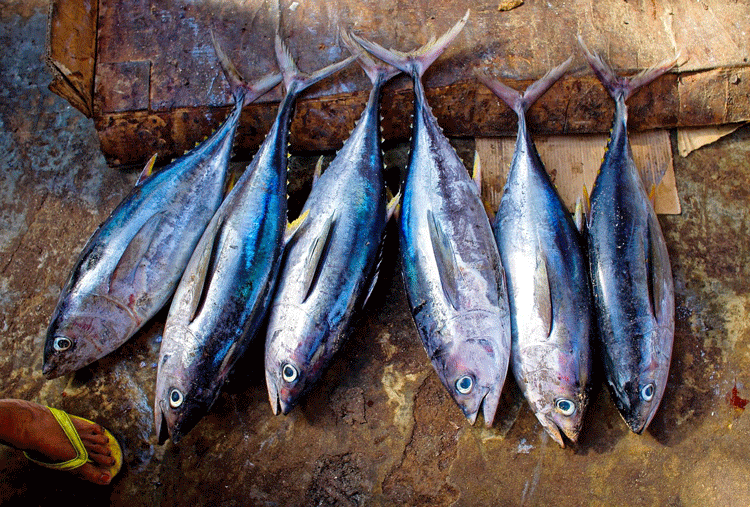
According to Huynh Chanh Thi, a fisher from Hoai Nhon Dong commune, skipjack was trading at VND 35,000/kg at the start of 2024. But prices fell sharply to VND 25,000/kg after Decree 37/2024/ND-CP, which imposed a 50-cm minimum size, took effect in May. “Fish over 50 cm are extremely rare. Traders used the regulation to argue that processors would only accept larger fish, so they pushed prices down. We were taking losses on every front,” Thi said.
Operating costs surged at the same time. Each voyage that previously required around VND 100 million now demands up to VND 300 million due to rising fuel and input costs. “With prices falling and expenses climbing, we lost almost VND 400 million per trip, not counting the VND 5-7 million we must advance to each crew member. It’s been a brutal year,” he added.
Optimism returns
Thi’s family operates four large-capacity vessels. Despite consecutive storms, No. 13 and No. 15, the boats have had to remain at sea as the skipjack season nears its end, a period when fish sizes and prices typically improve. He noted that from January 2026, when the peak season begins and the minimum-size rule will no longer apply, fishers expect to turn a profit again and return to sea in greater numbers.
Veteran fisher Bui Thanh Ninh, from Hoai Nhon Bac ward, shared similar relief. He previously raised concerns at a Vietnam Association of Seafood Exporters and Producers (VASEP) workshop in August 2024, arguing that the minimum-size measure was impractical for both harvesting and marketing.
With more than 30 years at sea, Ninh said that skipjack weighing 300 g to 1 kg account for roughly 80 percent of landings, while fish over 1 kg make up only about 20 percent. During the July – January season, small fish dominate the catch at 80-90 percent; from February to June, they drop to around 5 percent.
“So imposing a 50-cm minimum size simply didn’t match the biological reality of the fishery. Its suspension is a major relief and removes the pressure of operating at a loss,” he said.
VFM