
Phu Tho – Sturgeon farming thrives in Khe Nhoi’s mountain forests
Nestled in the rugged mountains of Trung Son (Phu Tho province), the sturgeon farm run by Bui Van Lam has emerged as a shining example of modern aquaculture, delivering year-round yields while providing sustainable livelihoods for local communities.

Chasing water for sturgeon
Nearly a decade ago, reaching Trung Son required a four-wheel drive vehicle to navigate rough trails. Today, a paved road connects this 96.9 km² highland area, dominated by steep mountains and deep valleys, to broader economic opportunities.
Lam began his aquaculture venture in 2017 in Sa Pa, farming sturgeon and salmon fry. Yet the harsh climate limited operations to just eight months a year. Refusing to give up, he scouted across the north until discovering Dak Hop stream in Trung Son, where water temperatures remain between 13-26°C year-round, ideal for sturgeon growth over 12 months.
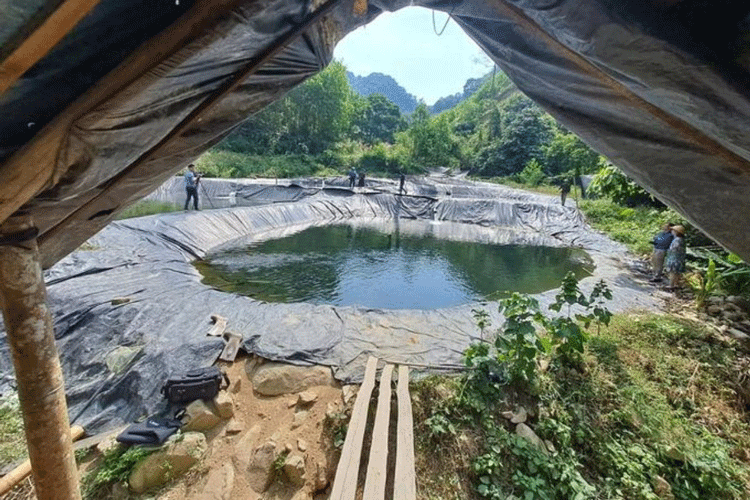
Since 2022, Lam and his partners have invested tens of billions of dong to establish three farms in Trung Son: two hatcheries and one grow-out facility with 31 ponds. The network has since expanded to Tuyen Quang and Lao Cai, with total capital of around VND 80 billion and production capacity of one million fingerlings annually. The projects are co-financed by Dao, Muong, and Mong ethnic families, and provide stable jobs with an average monthly income of VND 10 million per worker.
Overcoming technical hurdles
At just 200 meters above sea level, Khe Nhoi farm sits much lower than Sa Pa, but it benefits from pristine headwaters flowing directly from ancient forests, untouched by upstream farms. Warmer water, however, brought challenges such as gill and intestinal fungal diseases. To counter these risks, Lam introduced regular salt baths, supplemented feed with herbs and probiotics, and cut mortality rates from 30% to just 5%, on par with leading sturgeon regions.
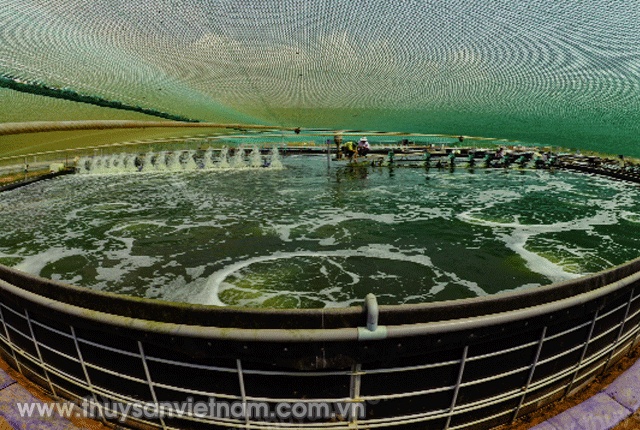
He also pioneered the use of composite tanks instead of concrete, reducing injury and infection risks while maintaining cleaner conditions. Aeration systems with oxygen tanks and paddle wheels further stabilized water quality. From an early stage where losses reached 90%, survival rates now range between 60-80%.
The improvements are evident in growth rates: sturgeon gain 400-500 grams per month in summer and 200-300 grams in winter. As a result, fish reach market size in 15-16 months, compared with 24 months in Sa Pa, while maintaining comparable flesh quality.
Between promise and uncertainty
Guiding visitors past tiered ponds where oxygen-rich water cascades from one tank to another, Lam proudly showcases the fruits of years of persistence. The sturgeon raised here are known for their firm, flavorful flesh, served as sashimi or grilled.
Yet behind the taste of success lies market uncertainty. Farmgate prices for sturgeon have dropped sharply in recent months, with traders disappearing from the scene. “We feel like we’re sitting on fire,” Lam admits.
Still, the Khe Nhoi sturgeon model highlights enormous potential: harnessing forest water resources, strengthening community ties, creating jobs, and opening new pathways for economic development in the highlands of Trung Son.
VFM