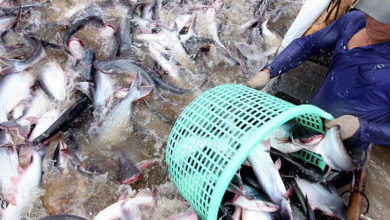

Vietnam’s lobster exports to China surged in 2025, emerging as a bright spot within the country’s USD 4.6 billion shrimp industry. Strong demand for Vietnamese spiny lobster, particularly green spiny lobster, helped the country climb to become China’s largest lobster supplier for the first time.
Data cited by the Vietnam Association of Seafood Exporters and Producers (VASEP) from China’s General Administration of Customs show that China imported 69,774 metric tons of lobster in 2025, up from 60,834t in 2024. Vietnam led suppliers with 24,067t, accounting for about 34.5% of total imports. Canada, which ranked first in 2024 with 26,920t, fell to second place with 15,355t in 2025. The United States supplied 9,931t, while Australia increased shipments to 6,950t.
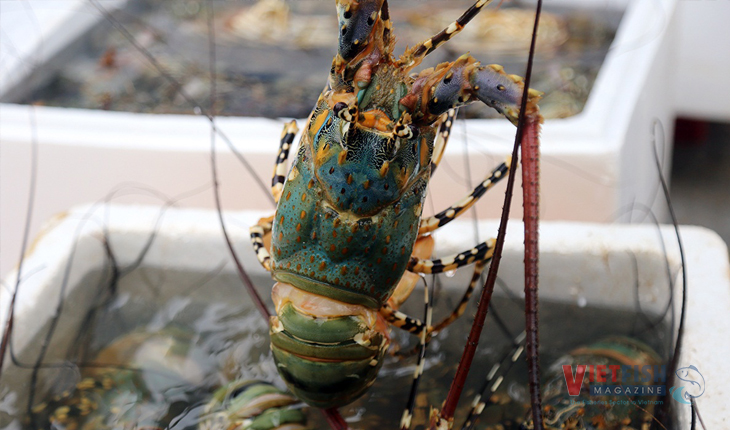
A key factor behind the shift was China’s decision to impose an additional 25% tariff on several Canadian seafood products, including lobster, effective March 20, 2025. The higher tariff eroded the price competitiveness of Canadian lobster, prompting Chinese buyers to seek alternative suppliers. Vietnam benefited from its proximity to the Chinese market, shorter transit times and flexible shipments of live and fresh lobster, a critical requirement for the product category.
Vietnam’s customs data show that shrimp exports to China and Hong Kong reached USD 1.3 billion in 2025, up 55% year on year. Green spiny lobster was the main growth driver, generating USD 840 million in export value, a 131% increase from 2024.
Momentum has carried into 2026. In January alone, Vietnam’s green spiny lobster exports to China and Hong Kong exceeded USD 100 million, up 6% compared with January 2025.
Competition in the Chinese market is expected to intensify, however, after China and Canada reached an agreement to remove the 25% tariff on Canadian lobster and crab starting March 1, 2026. Once the tariff barrier is lifted, Canadian suppliers may attempt to reclaim market share, particularly in premium restaurant and gift segments, while Australia is also strengthening its presence following the normalization of trade with China.
Against a backdrop of increasingly segmented consumer demand in China, Vietnamese exporters are expected to focus on maintaining consistent quality, standardizing product specifications and optimizing logistics for live and fresh shipments, while expanding direct links with modern distribution networks. While 2025 marked a breakout year for Vietnamese lobster in China, 2026 could prove a tougher test as competition in the premium segment intensifies.
VFM