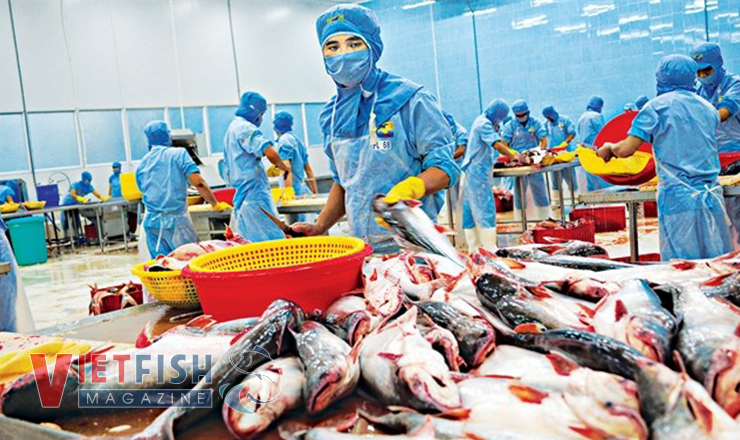

In 2018, Vietnamese pangasius exports to ten CPTPP countries were worth 328.4 million USD, up 17.3% as compared to the previous year. Exports to most countries grew, except for Mexico down 4.65% and Peru 19.6%.
In November, 2018, the Congress approved the Resolution regarding the acceptance of the Comprehensive and Progressive Agreement for Trans-Pacific Partnership (CPTPP) which is going to be effective to Vietnam as of 14 January 2019.
CPTPP countries commit to remove import tax out of their tariff table. Most of them impose the same tax rate on other members while Canada, Chile, Japan and Mexico have their own tax policy.
Seafood products, pangasius included, will be tax exempt once CPTPP becomes effective. Thus, opportunities for Vietnamese pangasius to enter traditional and potential markets such as Mexico, Japan and Chile will be favorable.
Mexico, the fifth rank among top Vietnamese pangasius importers (after China-Hongkong, EU, US, and ASEAN), bought Vietnamese pangasius worth 40.8 million USD, up 31.5% as compared to 2018. This is the biggest importer of pangasius in Latin America and among ten CPTPP countries. As stated in the Agreement, pangasius is one of the main products imported to Mexico and will be tax exempt starting from the third year since the Agreement becomes effective. This creates great opportunities for Vietnam’s pangasius exporting companies to penetrate this country.
Other than Mexico and Brazil, Chile is a small importer of Vietnamese pangasius in Latin America; however, in recent years after Free Trade Agreement (FTA) between Vietnam and Chile was signed in late 2011 and became effective in early 2014, there have been some positive signs for Vietnamese pangasius when local people are getting used to consuming the fish. With tax exemption on frozen pangasius (HS 030462), Vietnam’s products will either consumed in this country or penetrate others in the region. In 2018, Vietnamese pangasius exports to Chile increased by 11.3% as compared to the previous year.
The year 2018 marked the growth of Vietnamese pangasius to Japan as total export volume increased by 37.6% as compared to 2017. Moreover, exports to this market in the first four month this year reached 8.58 million USD, up 38.6% year-on-year.
Japan-Vietnam FTA and ASEAN-Japan FTA helps to remove tax on some of Vietnam’s products exported to Japan while CPTPP enables tax exemption on the remaining products. Even some items will enter Japan with tax free right after the Agreement becomes effective, pangasius products with tax 3.4-10.5% are included. Thus three FTAs are creating more favorable opportunities for Vietnam’s pangasius exporters to develop in Japan.
Besides the above mentioned countries, other CPTPP members such as Canada, Australia, Singapore, Malaysia are allegedly potential markets for Vietnam’s exports in the future. In 2018 alone, Vietnamese pangasius exports to these countries increased with Canada up 19.5%, Australia 34.4%, Singapore 20.7% and Malaysia 72.2% as compared to the previous year.
Besides challenges, CPTPP brings out great opportunities for Vietnam’s pagasius companies. They, therefore, should study the benefits if tariff policy that CPTPP brings to grasp the opportunities and boost their exports.
VFM