
Vietnam’s sturgeon sector faces market slump
Over the past two weeks, Bui Van Lam’s sturgeon farms in Phu Tho, Tuyen Quang and Lao Cai, which normally produce millions of fingerlings and hundreds of tonnes of fish a year, have received just one 200kg order, down from daily sales of several tonnes to 15-20 traders.

Heavy investment, collapsing sales
Originating from Thuy Tram village in Phu Tho, Bui Van Minh, one of 20 investors in Lam’s farm network, mortgaged his land title and borrowed billions of dong to raise sturgeon. In 2023, fingerling sales brought in VND 100 billion (USD 3.9m), with a profit margin of around 30%.
In 2024, the farms added grow-out production, selling 80 tonnes for VND 14 billion (USD 550,000). For 2025, output was projected at 800 tonnes of market fish plus millions of fingerlings until demand suddenly stalled.
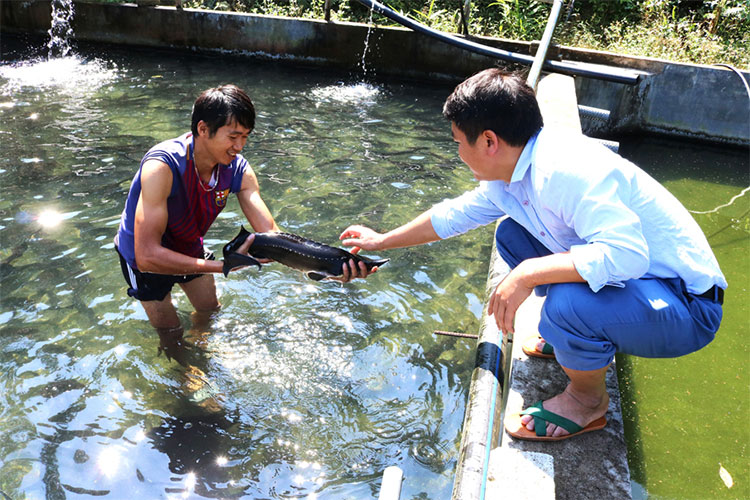
Since the start of this year, fingerling prices have fallen from VND 15,000-20,000 to just VND 8,000 each. Market fish prices have dropped from VND 160,000-170,000/kg to VND 130,000/kg.
Lam blames the slump on a surge in domestic production combined with a daily influx of around 10 tonnes of Chinese sturgeon into Hanoi through official channels, selling for just VND 125,000-130,000/kg. These imports are large-sized and plentiful.
Chinese sturgeon passing as Vietnamese
Previously, smuggled Chinese sturgeon was cheaper but short-lived on the market, while Vietnamese fish always came with locally issued origin certificates.
Now, officially imported Chinese fish no longer require such documentation, making it hard for consumers to tell the difference. The two look almost identical, but Chinese sturgeon flesh is whiter, softer and spoils faster due to long transport.
Lam says his farms use pristine mountain spring water, no antibiotics or chemicals, and premium feed, producing firm, rich-tasting flesh. Even so, traders lump his product together with regular farmed fish.
Fingerling facilities are now overloaded, forcing stock into makeshift stream enclosures, while market fish sales have gone from tonnes at a time to just a few fish per transaction.
A young industry without protection
“Sturgeon farming in Vietnam is like a toddler learning to walk, without protection, it will never grow up,” Lam said. While Chinese farms enjoy free expressway transport, Vietnamese producers must shoulder all costs themselves. Lam’s network spends around VND 100 million (USD 3,900) daily on feed, VND 20 million on labour, and VND 30 million on electricity. He is currently holding about 1 million unsold fingerlings and 800 tonnes of market fish.
At the end of July, the Lao Cai Coldwater Fish Association urged farmers to cooperate in maintaining prices and improving quality to stay competitive. Chinese sturgeon is estimated to hold 50% of the Vietnamese market, with only a few loyal restaurants still ordering local fish. Lam is calling for government support on traceability, official certification labels, and even dedicated sales points in Hanoi to protect the domestic brand.
VFM