
Vietnam’s tuna exports to Lithuania surge, paving the way into Eastern Europe
Lithuania is emerging as a strategic gateway to Eastern Europe, attracting growing interest from Vietnamese tuna exporters. In recent years, exports to this market have seen rapid growth, opening up new opportunities for Vietnam’s seafood industry.

Ranked 79th globally by economic size and 36th by per capita income, Lithuania boasts a GDP per capita of approximately USD 23,723 and a total GDP exceeding USD 66 billion. The country imports around USD 650 million worth of seafood annually, making it the 12th largest seafood importer in the European Union, accounting for 1.2% of the bloc’s total seafood imports. In 2022, Vietnam was Lithuania’s sixth-largest seafood supplier outside the EU, with a market share of 3.54%.

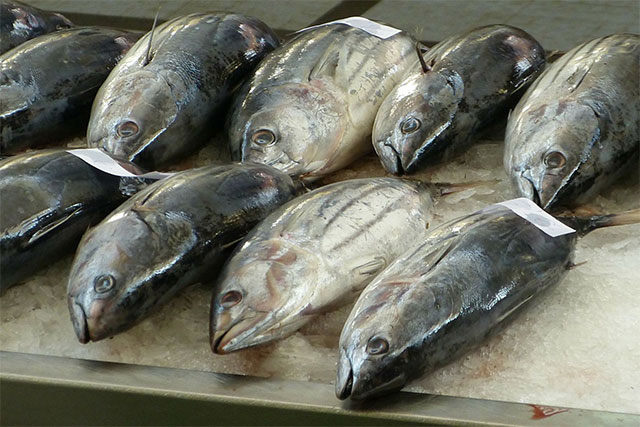
According to the General Department of Vietnam Customs, Vietnam’s tuna exports to Lithuania soared from just USD 229,000 in 2021 to nearly USD 16 million in 2024, a 69-fold increase in just three years. In the first five months of 2025, exports continued to double year-on-year, reaching over USD 8 million. Frozen tuna fillets/loins (HS0304) were the primary export item, accounting for 98% of the total export value.
Lithuania has been a member of the EU since 2004, while Vietnam and the EU have established several legal frameworks to enhance cooperation in trade, investment, and economic development. Notably, the official visit to Vietnam by Lithuanian President Gitanas Nausėda and the First Lady on June 11-12, 2025 marked the first Lithuanian head-of-state visit in years, ushering in a new chapter for bilateral relations amid a volatile global landscape.
At a recent seminar celebrating the 75th anniversary of diplomatic ties between Vietnam and Eastern European countries, Deputy Prime Minister Tran Hong Ha outlined five strategic tasks to elevate the relationship, including a push to strengthen economic cooperation and fully leverage the EU–Vietnam Free Trade Agreement (EVFTA) to boost annual trade by 10%.
Vietnamese businesses’ accelerated tuna exports to Lithuania are seen as a well-aligned strategy with promising potential for further expansion. However, to fully capitalize on these opportunities, the business community is calling on the government to swiftly amend Decree 37/2024/ND-CP, which guides the implementation of the 2017 Fisheries Law. Current regulations, such as minimum catch size and bans on product mixing, are seen as barriers. Prompt revision of the decree is expected to unlock more domestic tuna supply, enabling exporters to take greater advantage of free trade agreements and enhance competitiveness in international markets.
VFM