
Smart Nutrition Shaping the Future of a Sustainable Fisheries Sector
As digital transformation and sustainability reshape the sector, smart nutrition is emerging as a way to improve production efficiency, animal health and environmental performance. Dr Nguyen Duy Hoa, Global Technical Director of Cargill’s Empyreal business, shares his perspective on the role of science, technology and data in shaping the future of the fisheries sector.

Reporter: The fisheries sector is moving into the 4.0 era. What does “smart nutrition” mean, and how does it differ from conventional nutrition solutions?
Dr Nguyen Duy Hoa: Smart nutrition combines precision nutrition science with data, sensors, digital tools and artificial intelligence to develop feeding programmes that match an animal’s biology and the conditions on the farm. The goal is to optimise productivity, animal health, economic returns and the sustainability of the entire value chain at the same time.
For years, the feed industry focused mainly on supplying protein, lipids, vitamins and minerals. A smart nutrition solution needs to go further. Is the animal absorbing nutrients efficiently? Is gut health improving? Is the animal more resilient to stress and disease? Is less waste being released into the environment, and are greenhouse gas emissions being reduced? And, ultimately, does the farmer achieve better economic results?
The key difference is the approach. Traditional solutions focus on optimising feed ingredients to meet nutritional requirements and control formulation costs. Smart nutrition aims to optimise the overall outcome of the production system. This means combining precision nutrition, raw materials with high biological value, functional ingredients and additives, modern production technologies and data analysis to get more value from every kilogram of feed.

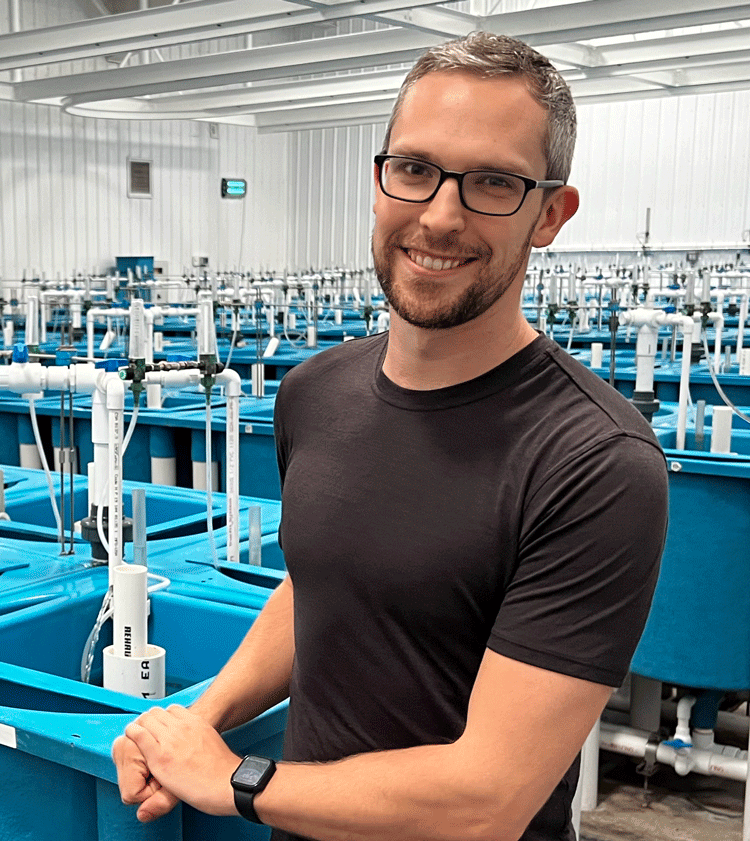
Dr. Nguyen Duy Hoa – Global Technical Director for Empyreal Products, Cargill Inc.
Reporter: For farmers, efficiency depends on more than the price of feed. How does smart nutrition improve farm economics?
Dr Nguyen Duy Hoa: That is an important point. Feed accounts for 50–60% of farming costs, but farmers do not make money simply by buying cheaper feed. They make money by producing more at an optimised cost. So the figure that matters is not the price per kilogram of feed, but the cost of producing one kilogram of shrimp or fish.
A smart nutrition programme can improve economic efficiency in several ways. These include applying precision nutrition science, developing feeding strategies based on the animal’s biology, and combining them with technologies such as sensors, digital tools and artificial intelligence (AI). Together, these approaches can improve pond water quality, animal health and nutrient utilisation, with the aim of increasing yield per unit area and lowering the cost of each kilogram of weight gain.
For shrimp, for example, particular attention should be paid to nutritional quality and animal health during the early stage of the crop, especially the first 45 days, to improve survival through to harvest. When animals have a strong health foundation from the beginning, their growth potential in later stages can also improve.
Small improvements in survival or feed conversion ratio (FCR) can add up quickly at scale. Across thousands of tonnes of feed or hundreds of hectares, even modest gains can have a significant economic impact. That is why more businesses are evaluating nutrition solutions based on return on investment rather than product price alone.
Reporter: Export markets are placing greater emphasis on sustainability, traceability and carbon footprints. Where does nutrition fit into reducing environmental impact?
Dr Nguyen Duy Hoa: Carbon footprint covers more than CO2. It also includes methane (CH4), nitrous oxide (N2O) and fluorinated gases, all converted into a common unit, CO2 equivalent per unit of product. In seafood, the footprint reflects the combined impact of feed, the farming system, production technology and processing.
From the feed perspective, nutrition plays an important role in reducing environmental impact. This means not only reducing the use of ingredients with a high carbon footprint, but also developing feeding programmes that help animals digest and absorb nutrients more efficiently. This can reduce waste discharged into the environment and limit greenhouse gas emissions.
Environmental impact should also be considered more broadly, including greenhouse gases, nitrogen and phosphorus discharged into the environment, as well as pressure on biodiversity and wild fish stocks. Fishmeal has a lower carbon footprint than some plant proteins, such as soybean meal, yet efforts to reduce reliance on fishmeal continue because excessive pressure on the resource can affect wild fish populations, ecosystems and aquatic biodiversity.
Nutrition is therefore one of the tools available to improve sustainability. Ingredients with clear traceability, lower emissions and responsible production practices can have a positive effect across the value chain. Precision nutrition can also reduce nitrogen and phosphorus discharge. Better digestibility means animals use nutrients more efficiently, which can lower FCR and reduce the amount of raw material needed to produce each kilogram of seafood.
In the near future, I expect feed formulations to include carbon footprint, traceability and ESG indicators alongside nutritional information. These factors could become a competitive advantage in international markets.
Reporter: Could the sector move towards a tailored nutrition model, with solutions designed for each species, stage of development and production condition?
Dr Nguyen Duy Hoa: I believe this is an inevitable trend. In the future, feed will no longer be a fixed product but a flexible solution adapted to specific production conditions.
The sector is moving from “one formula for all” towards precision nutrition. Solutions will be designed around species, genetics, development stage, environmental conditions, water quality, stocking density, farming system, whether intensive, semiintensive or extensive, and technologies such as biofloc, recirculating aquaculture systems and flow-through systems.
When farm data is collected and analysed continuously, feeding programmes can be adjusted in real time to meet the animal’s nutritional requirements and production objectives more precisely.
Reporter: Data, artificial intelligence and automation are increasingly being applied in aquaculture. How do you expect these technologies to change nutrition management and farm operations in the future?
Dr Nguyen Duy Hoa: I believe artificial intelligence will bring major advances in nutrition management and in the operation of production systems more broadly. As technology develops, farmers will be able to monitor and manage farm operations remotely and more efficiently.
Sensors, underwater cameras, environmental monitoring systems and automatic feeders can continuously provide data on water quality, feeding activity, growth rates and animal health. This data can be integrated into decision-support software and analysed using AI to generate recommendations on feed quantity, feeding times and feed types, while also providing early warnings of potential stress or disease.
This can reduce feed waste, stabilise pond conditions, improve nutrient utilisation and lower production risks. Feed will no longer be simply an input. It will become part of a digital management system in which nutrition, the environment and animal health are managed together.
“I believe the future of the fisheries sector will not be decided
by which company produces feed at the lowest cost, but by
which company creates the most value from every kilogram of
feed used. Smart nutrition will be the bridge between science,
technology and sustainable development, helping farmers
improve economic efficiency while meeting the increasingly
stringent requirements of global markets.”
Reporter: From your technical perspective, which research and innovation trends in aquatic nutrition are most likely to change the field?
Dr Nguyen Duy Hoa: In my view, five main trends will shape aquatic nutrition over the next decade.
First, new-generation proteins: fermented protein, single-cell protein, insect protein and other sources with high biological activity. These can reduce reliance on marine resources while supporting animal health and farming efficiency. Key areas of research include: Fermented proteins producing organic acids and bioactive peptides Single-cell protein Insect protein Protein from microalgae and seaweed Bacterial protein Upcycled proteins from by-products
Second, precision nutrition, with attention shifting from crude protein content to digestible amino acids, bioactive peptides and how efficiently animals use the nutrients they receive.
Third, functional nutrition, focused on gut health, immunity and resilience through compounds such as postbiotics, anti-stress and antioxidant agents, natural antimicrobials, and vitamin and mineral supplementation as alternatives to antibiotics.
Fourth, digital nutrition, using big data, AI and predictive models to design and adjust nutrition programmes according to conditions on individual farms.
Fifth, producing more with less. Every innovation will ultimately serve the same goal: more output, fewer resources, lower emissions and better economics. That is also what the sector needs for long-term sustainability.
Thank you very much.