
Hue pilots rice–shrimp co-culture in saline and acid sulfate soils
A pilot rice–shrimp co-culture system is showing promise in Hue, Vietnam, where saline and acid sulfate soils have long limited rice productivity.

In Quang Dien commune (Hue City), about 200 hectares of paddy land near the Tam Giang Lagoon are affected by salinity and acid sulfate intrusion. Farmers in these areas can usually cultivate only one rice crop during the winter–spring season, while fields are often left fallow in the summer–autumn due to salt damage.
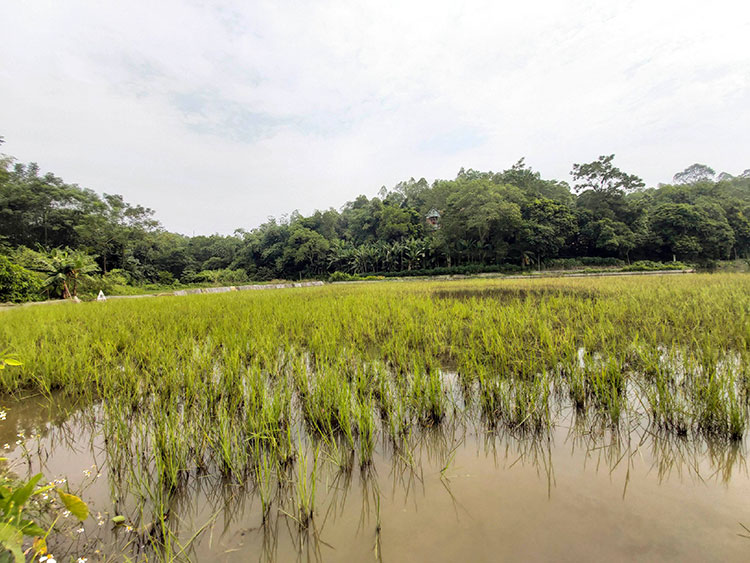
To address this challenge, Hue’s Agricultural Extension Center has introduced a rice–shrimp co-culture model on 14 hectares during the 2025 summer–autumn crop. The pilot is being implemented at Dong Phuoc Cooperative and Cooperative No. 2 in Quang Dien, with financial support from Vietnam’s rice land policy.
The integrated approach is designed to deliver both economic and environmental benefits. Shrimp waste and uneaten feed fertilise the rice crop, while the paddy fields provide natural food and a stable habitat for shrimp. The system requires no pesticides or antibiotics, reducing environmental impacts and improving product safety.
Farmers involved in the project report that the model has the potential to generate higher returns than rice monoculture, while also diversifying production and creating eco-friendly products for the market. To encourage wider adoption, training sessions have been organised for both participating households and neighbouring farmers.
After 65 days of culture, shrimp in the pilot ponds have shown healthy growth, averaging 65-75 shrimp per kilogram with an estimated survival rate of 70-72 percent. Expected output from the trial is around 6.9 tonnes.
VFM