
Ha Tinh farmers turn to climate-resilient aquaculture models
Ha Tinh province in central Vietnam is turning to climate-adaptive aquaculture systems as farmers struggle with harsher weather conditions and rising production risks. With nearly 7,400 hectares under aquaculture, the sector faces mounting challenges from prolonged heatwaves, frequent storms, flooding and recurring disease outbreaks.

Farmers turn to high-tech shrimp models
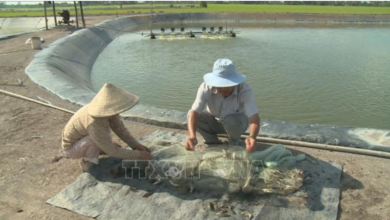
Despite these hurdles, farmers such as Duong Quoc Khanh in Tran Phu ward have seen success with intensive shrimp farming using a three-stage system combined with probiotics and recirculating aquaculture system (RAS) technology. His setup, including nursery, first and second grow-out ponds lined with HDPE, allows water to be treated with probiotics and recirculated through a 35 m² treatment pond.
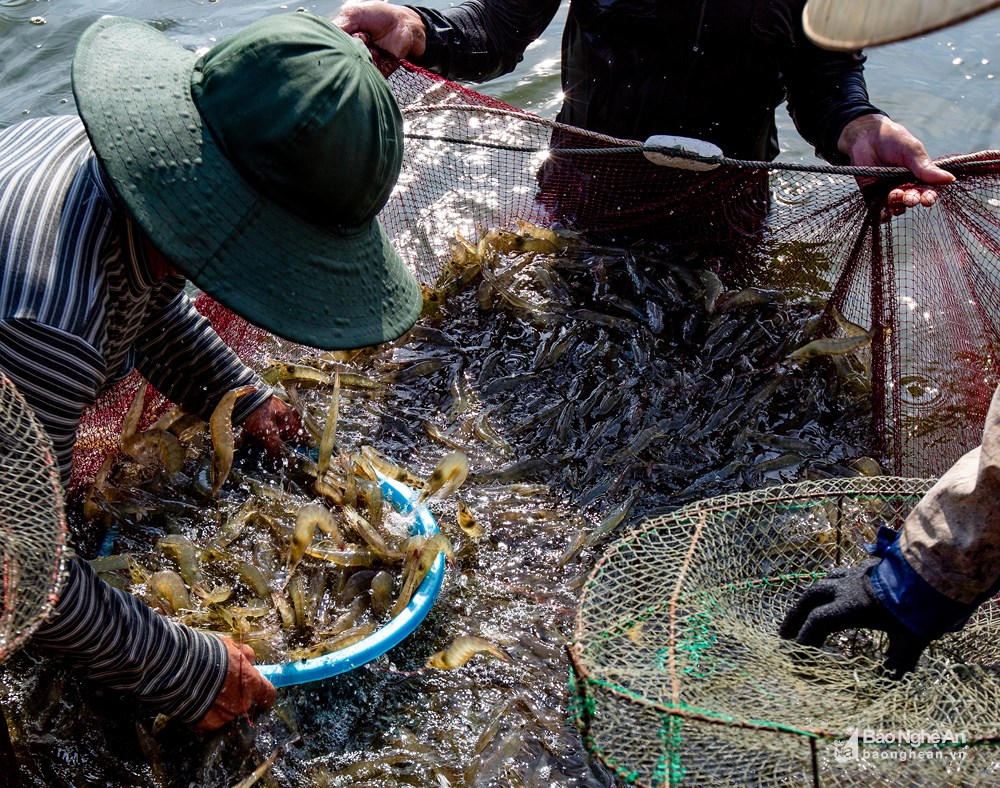
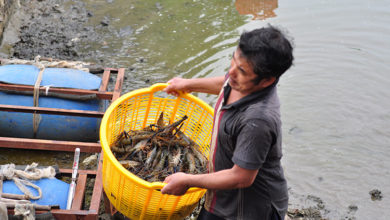
Khanh reports water savings, tighter quality control, higher survival rates above 85%, and the ability to farm two to three crops a year. On a 5,000 m² site stocked at 150 postlarvae per m², he harvested shrimp after 90 days at 35-40 pcs/kg, producing over 10 tonnes and netting profits close to VND 1 billion (USD 40,000).
Larger firms are also investing. In 2024, Thong Thuan Seafood JSC put more than VND 3 billion (USD 120,000) into four greenhouse facilities in Co Dam commune. General director Vo Chau Trong said the three-stage probiotic-based model limits pond pollution, ensures survival rates above 80%, and eliminates the need for chemicals or antibiotics. “With the greenhouse system, farmers can feel secure even under prolonged heat or cold spells,” he said.
Ha Tinh authorities have set a target of expanding high-tech shrimp farming to 680ha by 2025, out of a planned 2,250ha shrimp zone. The aim is to scale up intensive, technology-based production that boosts yields, improves farmer incomes, and supports sustainable growth.
Integrated models offer resilience
Alongside intensive systems, integrated aquaculture is being promoted as another climate adaptation strategy. Farmer Truong The Cuong in Thanh Sen ward, who previously lost crops of whiteleg shrimp to disease, has shifted to a polyculture system of black tiger shrimp, mud crabs and mullet across one hectare. Stocking 50,000 shrimp, 5,000 mullet and 5,000 crabs, he earned a net profit of VND 250 million (USD 9,800) after six months.
Cuong said the system reduces input costs and improves pond health, with species complementing each other across different water layers. Mullet consume leftovers, algae and benthic organisms, reducing pollution and helping restore pond ecology in disease-prone areas.
Other models being promoted by Ha Tinh’s extension services include VietGAP-certified golden pompano linked to markets, two-stage mud crab farming adapted to climate impacts, and mud-free eel farming for food safety.
Long-term adaptation requires investment
Authorities and technical experts stress that broader adaptation will require both on-farm changes and public investment. Recommended approaches include multi-layer and multi-species systems, tank-based culture, multi-phase whiteleg shrimp, brackish shrimp, and smaller, more manageable ponds with tighter water quality control.
Infrastructure improvements, including dykes, pumping stations, electricity, and water supply and drainage systems, are also in planning. Officials emphasize that long-term resilience depends on coordinated government support alongside private investment from domestic and foreign firms in aquaculture infrastructure and technology.
VFM