
An Giang province pushes high-tech shrimp farming to boost output
Vietnam’s southern province of An Giang is accelerating the shift to high-tech shrimp farming in a bid to raise productivity and reduce risks from disease and volatile markets, provincial officials said.

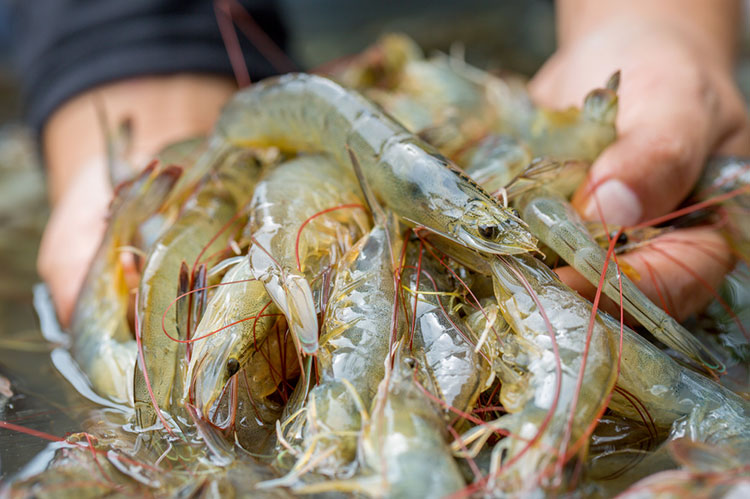
Facing market fluctuations and disease outbreaks, Vietnam’s An Giang province is rolling out a high-tech agricultural transformation plan to boost shrimp yields, reduce risks and build a more sustainable industry. By 2025, the province’s brackish-water shrimp farming area is projected to reach 137,000 hectares, producing more than 155,000 tons, making shrimp one of its key economic drivers.
However, the province still lags behind. An Giang currently ranks fifth in shrimp production in the Mekong Delta, according to the provincial Fisheries Association, largely due to underdeveloped infrastructure, limited access to saline water, and reliance on imported broodstock. Farmers also struggle with high production costs, low market prices, disease outbreaks and pollution.
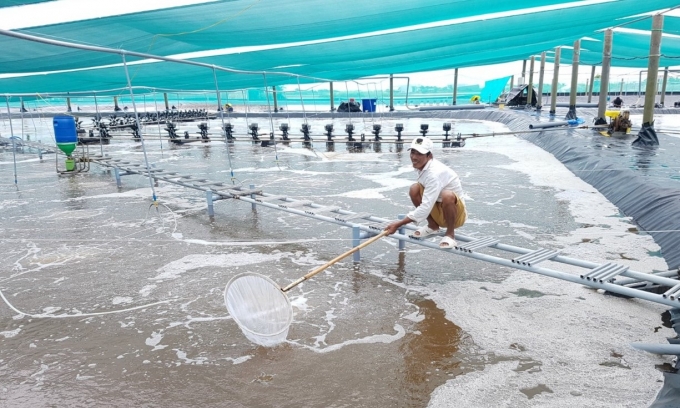
To tackle these challenges, local authorities are promoting the use of advanced farming technologies such as Biofloc, recirculating aquaculture systems (RAS) and IoT-based environmental monitoring. Several companies have invested in high-tech shrimp farms and begun exporting to demanding markets including the United States and Japan. Yet, steep upfront costs remain a major barrier for small-scale farmers.
One example is Trung Son Joint Stock Company, which runs internationally certified shrimp farms. In the first half of 2025, it exported 3,650 tons of shrimp worth USD 9 million, and aims to produce 6,500 tons by year-end, targeting export revenues of more than USD 20 million.
Individual farmers are also embracing the shift. In To Chau, farmer Phan Hieu Nghia has adopted intensive, high-tech shrimp farming methods, earning annual profits of 200-500 million dong (USD 8,000-20,000) through improvements such as shading nets, bottom-aeration systems and automated feeding.
By 2030, An Giang aims to expand its shrimp farming area to 145,440 hectares and position itself as a leading hub for high-quality shrimp production in both the Mekong Delta and Vietnam.
VFM