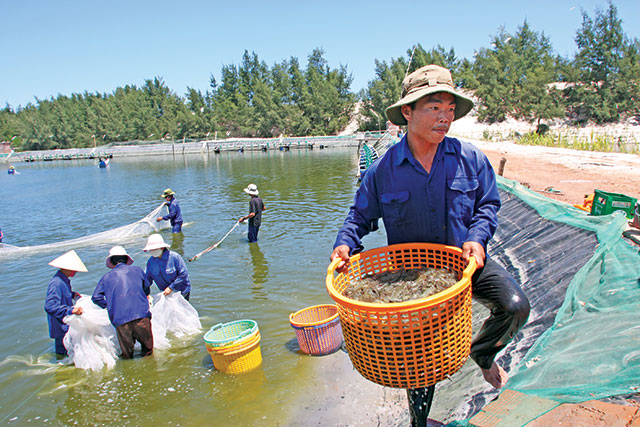

On November 29, the Ca Mau Department of Fisheries, in coordination with the College of Aquaculture at Can Tho University, organised a technical training course on two-phase shrimp farming for members of the Tan Thanh Cooperative in Tan Thanh hamlet, Dam Doi commune.
The cooperative currently has 30 members applying the two-phase shrimp farming model over a combined area of around 40 hectares. Average household income ranges from VND 5-8 million per month, with several farms reporting monthly earnings of VND 10-20 million, reflecting the model’s growing economic appeal.
During the training, Associate Professor Dr Chau Tai Tao from the College of Aquaculture at Can Tho University presented the complete two-phase production protocol, covering nursery and grow-out pond preparation, water quality management, optimal stocking densities, disease prevention, the application of probiotics and practical measures to improve survival rates across both production stages.
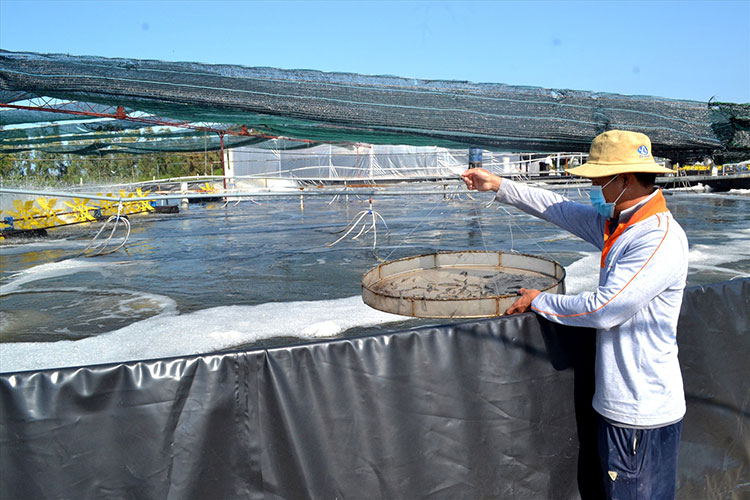
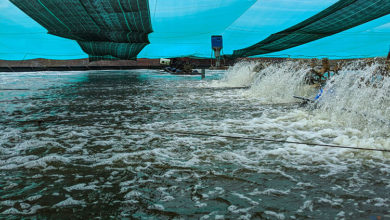
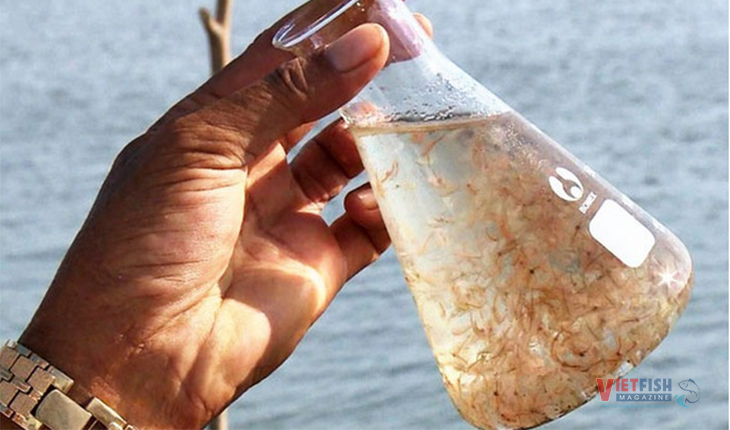
According to Dr Chau Tai Tao, two-phase shrimp farming is increasingly being adopted as a mainstream approach in modern shrimp production thanks to its improved environmental control, lower disease risk, shorter production cycles and higher survival rates. Under this system, post-larvae are first reared in a closed, biosecure nursery at relatively high but strictly controlled densities. Once transferred to grow-out ponds, shrimp typically show stronger immunity and faster growth than those raised under traditional single-phase systems.
He emphasised three key success factors for effective implementation: the use of high-quality seedstock, maintaining a stable and beneficial microbial environment, and applying water treatment technologies that are appropriate for local farming conditions. He also encouraged farmers to strengthen technical cooperation and regularly update their knowledge in line with scientific advances, as part of a broader move towards more efficient and sustainable production.
The training programme gave participating farmers access to advanced farming practices aligned with Ca Mau province’s strategy for safe, efficient and sustainable aquaculture development, while also enhancing their technical capacity and on-farm management skills. In parallel, the Department of Fisheries provided hands-on guidance to support practical adoption of the model at farm level.
Nguyen Minh Duong, a member of the Tan Thanh Cooperative, said that traditional shrimp farming had previously been plagued by disease outbreaks, slow growth rates and high feed costs. “Since switching to the two-phase model, pond environments are better controlled, shrimp health has improved, survival rates are higher and the production cycle is shorter,” he said. “Although the initial investment is higher, the system offers more stable yields, easier management and significantly better profitability.”
With improved understanding of seedstock management, microbial control and water treatment, which are widely recognised as key determinants of farming performance, local farmers are optimistic that the two-phase shrimp farming model will be expanded further, contributing to higher incomes and the long-term sustainability of Ca Mau’s shrimp sector.
VFM