
Vietnam seafood sector says supply chains meet U.S. origin rules as tariff threat looms
As the United States prepares to impose new reciprocal tariffs, Vietnam’s seafood industry says its export supply chains are nearly fully domestic, meeting origin requirements.

On July 2 (local time), U.S. President Donald Trump announced on Truth Social that a new trade deal with Vietnam had been reached, with details to be disclosed later. Among key U.S. concerns in the negotiations are rules of origin and local content ratios for goods shipped to the United States.
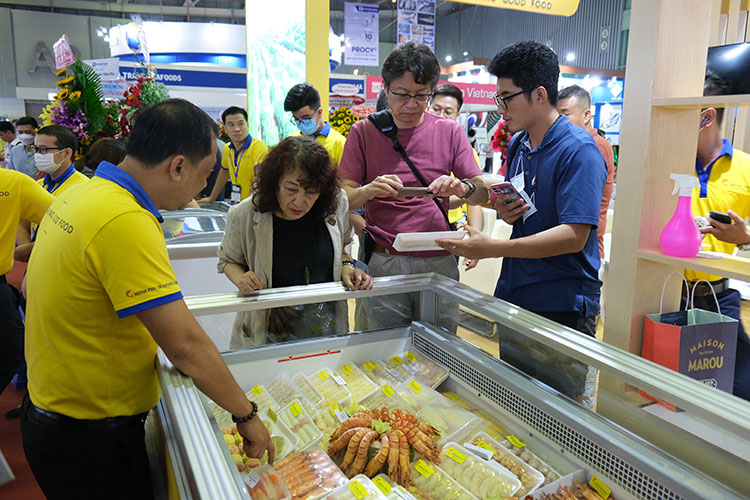
Seafood is one of Vietnam’s top export categories to the U.S. Many companies and industry experts say Vietnam’s production fully meets these standards. According to the Vietnam Association of Seafood Exporters and Producers (VASEP), seafood exports in the first half of 2025 rose nearly 19% year-on-year to USD `891 million to the U.S. market, up 16%, as exporters rushed to ship ahead of new tariffs set to take effect on July 9. Shrimp and pangasius together account for around 60% of total seafood export value.
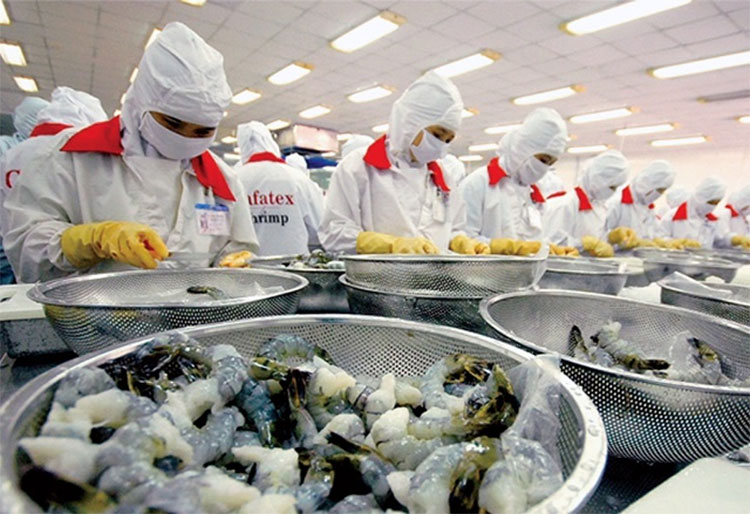
Ho Quoc Luc, chairman of Sao Ta Foods (FMC) and former chairman of VASEP, said the local content of Vietnam’s seafood exports is “virtually absolute,” with companies operating fully domestic, closed-loop supply chains from farming to processing. Imports make up only a very small share, mainly some feed ingredients and limited shrimp broodstock.
Luc said it was still unclear what tariff rate the U.S. might impose specifically on seafood or on shrimp, making detailed impact assessments premature. But he emphasized: “For shrimp in particular, the local content rate is extremely high. Farming and processing are entirely domestic. Only a small portion of feed ingredients and broodstock are imported.”
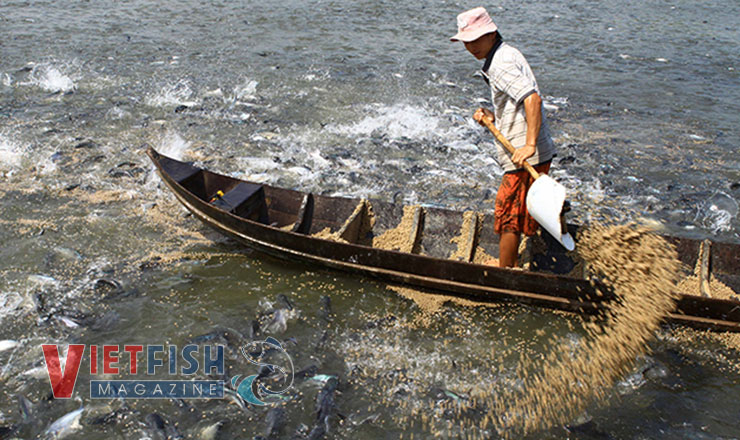
For pangasius, Vietnam enjoys a strong advantage thanks to an integrated, highly traceable production and processing chain. Vietnam supplies over 90% of the world’s frozen pangasius fillet exports, while competitors such as India, Bangladesh and Egypt mostly serve domestic markets or ship unprocessed fish to less demanding buyers.
The Mekong Delta is the world’s largest pangasius farming area, with tens of thousands of hectares of specialized ponds, favorable natural conditions and a stable water system. Major companies including Vinh Hoan, Nam Viet, IDI and Bien Dong Seafoods have invested in fully integrated value chains from broodstock and feed production to farming, processing and distribution. This integration reduces costs, improves quality control and ensures reliable traceability.
Nguyen Ngo Vi Tam, CEO of Vinh Hoan (VHC), told shareholders at the company’s annual meeting in May that she is “fully confident about origin” since the fish is raised entirely in Vietnam. She said even a 20% tariff scenario would be “very good,” while 46% would be much more negative. Still, with pangasius already highly competitive, even with a 46% duty, final prices would remain around 50-60 cents per pound, cheaper than common whitefish in the U.S. such as pollock or cod. “We still hope the tariff will be a bit lower so customers can adjust prices gradually,” Tam said.
VFM