
Ca Mau aims to lead crab farming in Mekong Delta
Ca Mau province in southern Vietnam plans to make crab farming a key economic sector, targeting the top position in the Mekong Delta and nationwide.

The sector is expected to contribute at least 8.5% to gross regional domestic product (GRDP) growth in 2025 and set the stage for double-digit growth in later years.
Under its 2025 Crab Industry Development Plan, the provincial government will expand technical training, create standardized farming zones, and strengthen supply chain and market links.
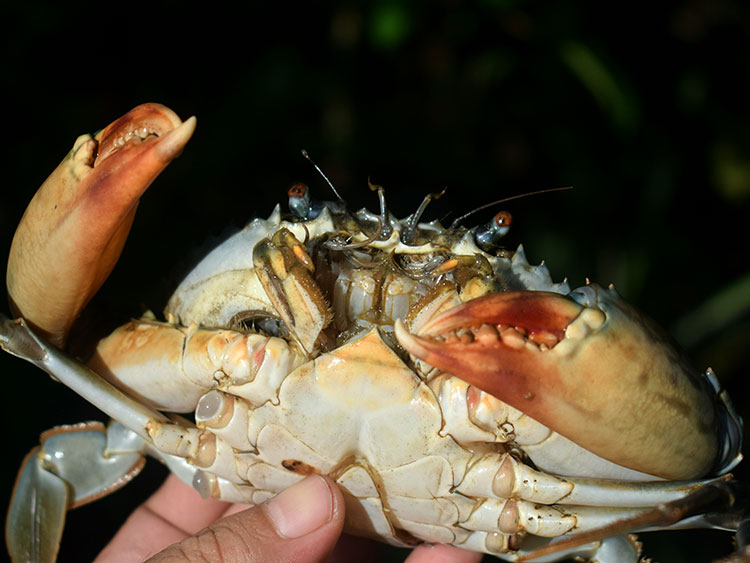
About 1,000 households will receive training and technology transfer on semi-intensive and integrated shrimp-crab farming. Another 4,000 households will get technical consulting. At least 12 new cooperatives, each covering more than 100 hectares, will be set up, along with 12 production-to-market linkage chains.
The province targets annual crab output of around 41,800 tonnes, with integrated farming areas reaching 418,340 hectares and average yields of 100 kg per hectare. Semi-intensive models are projected to produce 500 kg per hectare per crop.
Authorities also plan to expand a plastic-box farming model to 3,000 units, yielding about 7 tonnes a year of high-quality commercial crabs.
Officials said the plan focuses on both volume and quality while ensuring environmental sustainability. Following its merger with neighbouring Bac Lieu province, Ca Mau’s aquaculture area totals around 450,000 hectares, mainly for shrimp, with crab farming widely intercropped.
VFM