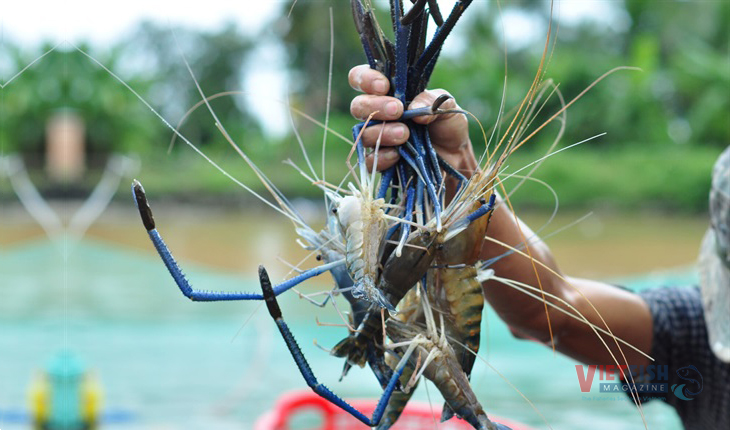

Vietnam seafood exports surge, set for further growth in 2025
Vietnam’s seafood exports rose 17.2% in the first seven months of 2025 to USD 6.22 billion, driven by strong demand for shrimp and lobsters in China, the United States and the United Arab Emirates, the country’s seafood association said.

Vietnam’s seafood sector is riding a wave of growth on the back of community-based aquaculture initiatives and rising global demand, but industry leaders warn that tariffs, climate risks and the EU’s “yellow card” on IUU fishing remain pressing obstacles.
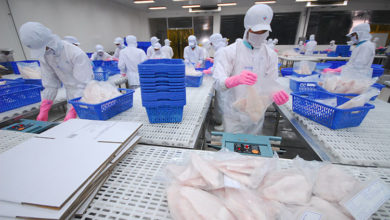
In late August, members of the Ky Nhu Cooperative in Can Tho were busy preparing featherback fish for export. Founded by Nguyen Kim Thuy in the early 2000s, the cooperative has built a value chain for featherback fish while creating jobs for local residents. Its breakthrough came with deboned featherback products aimed at both domestic and international markets.
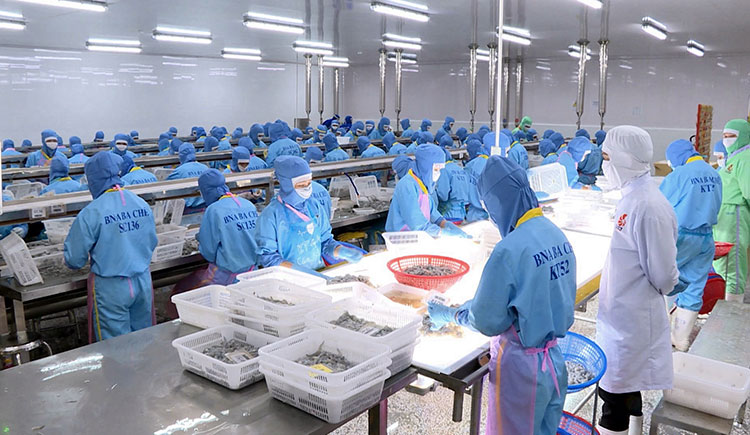
Last year, Ky Nhu shipped its first 20 tons of deboned featherback and fish cakes to the United States, opening the door for this freshwater specialty to reach global consumers.
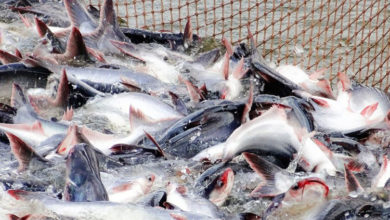
Elsewhere, farmers in Ho Chi Minh City’s An Thoi Dong commune are shifting from shrimp to pangasius krempfi, a move delivering higher returns. Farmer Tran Hoai Son expanded from a 4,000-square-meter pilot farm to more than 1.5 hectares, earning hundreds of millions of dong per harvest. Another farmer, Van Huu Lac, now cultivates over 10 hectares.
“Ten years ago, only a few households raised pangasius krempfi. Now many have switched from shrimp to fish,” Lac said. “Living standards have improved, people are building houses and buying cars thanks to pangasius krempfi.”
According to the city’s Department of Agriculture and Environment, An Thoi Dong, Can Gio and Binh Khanh communes supply around 300 tons of pangasius krempfi annually, part of which is exported to Europe as fresh or dried fish.
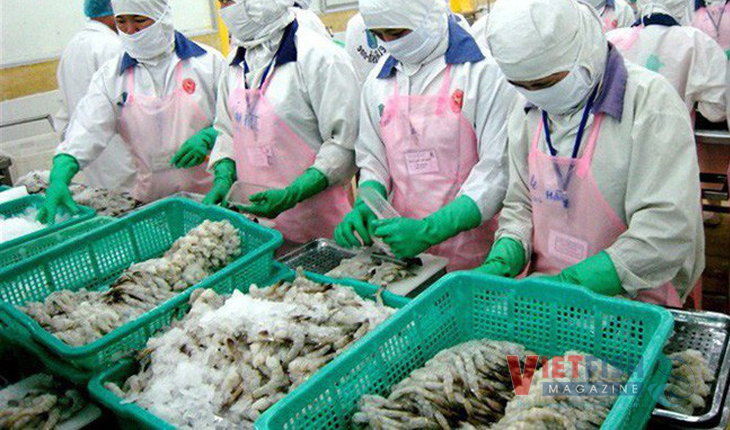
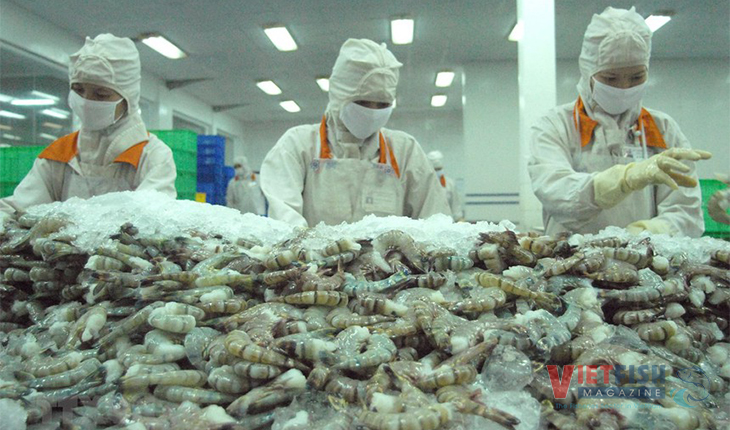
The Vietnam Association of Seafood Exporters and Producers (VASEP) reported that shrimp exports reached USD 2.5 billion in the first seven months of 2025, up 23% year-on-year, while lobster exports surged to markets including China, the UAE and the United States.
Overall seafood exports hit USD 6.22 billion in the same period, a 17% increase from last year. VASEP Deputy Secretary General To Thi Tuong Lan said demand from China, ASEAN and Japan, combined with easing EU technical barriers, is fueling growth. She added that value-added seafood products are well positioned for further expansion.
Despite the momentum, risks remain. The Directorate of Fisheries has flagged rising tariffs and non-tariff barriers that continue to push up production costs and erode competitiveness. Climate change is another growing threat, with increasingly severe storms and typhoons disrupting aquaculture and fishing activities.
Vietnam’s seafood sector also continues to grapple with the EU’s “yellow card” warning on illegal, unreported and unregulated (IUU) fishing. Importers have tightened requirements for traceability and legality, making it harder for exporters to maintain and expand market share.
Still, fresh opportunities are emerging. Ngo Hong Phong, head of the Department of Quality, Processing and Market Development, said Vietnam is working to reopen the Chinese market for spiny lobster, a move he believes could deliver “very strong results.”
Brazil has also revised its standards for pangasius and officially opened its market to tilapia, creating new channels for Vietnamese exporters. “These are major markets that could significantly boost Vietnam’s seafood industry,” Phong said.
Deputy Minister of Agriculture and Environment Phung Duc Tien said the sector will prioritize technological upgrades under Resolution 57, particularly investments in broodstock development and marine aquaculture. Large corporations are expected to play a growing role in driving innovation and scaling production.
On IUU fishing, Tien said the ministry will step up inspections and monitoring at the local level to ensure compliance and accelerate efforts to lift the EU yellow card. “Resolving this issue is key to safeguarding Vietnam’s market access and sustaining long-term export growth,” he said.
VFM