
Vietnam’s north-central coastal province of Thanh Hoa steps up port inspections and digital traceability as the country seeks to lift the EU ‘yellow card’.
Vietnam’s coastal province of Thanh Hoa has tightened controls over the purchase and handling of wild-caught seafood, increasing oversight from landing ports to processing plants as the country enters the final stage of efforts to have the European Union lift its “yellow card” warning over illegal, unreported and unregulated (IUU) fishing.
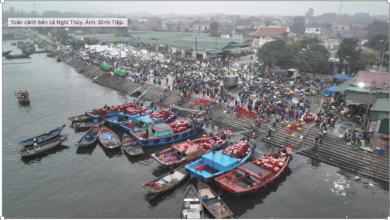
Under the stricter regime, fishing vessels are no longer allowed to offload catches at informal landing sites. Boats must now dock at designated ports, where landings are inspected and verified to ensure full traceability. Thanh Hoa operates four designated ports – Hoa Loc, Lach Hoi, Lach Bang and Hai Chau, all of which are linked to Vietnam’s national electronic catch documentation and traceability (eCDT) system.
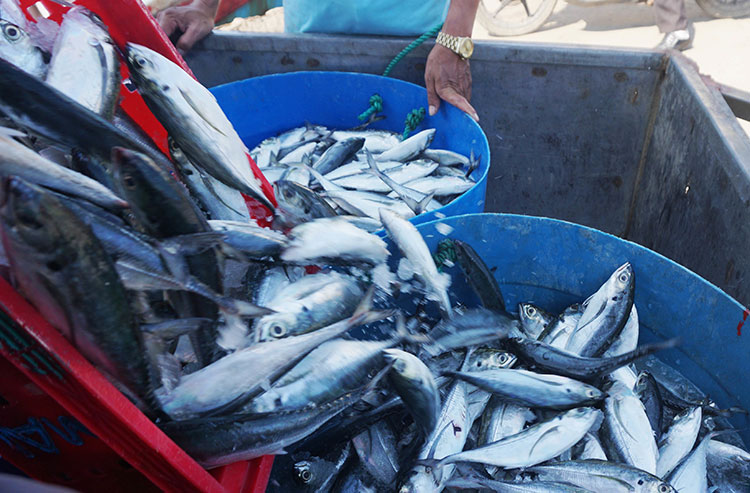
All vessel movements, landings and offloading activities are recorded digitally, allowing authorities to track seafood from the point of landing through to processing.
Trading activity at the ports has remained brisk but orderly in early 2026, with fishermen, vessel owners and seafood traders operating under closer supervision. Provincial authorities said the tighter controls have increased buyer confidence, as catches are now systematically verified before entering the supply chain.
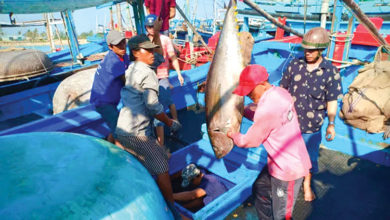
Compliance has become routine for fishermen, according to vessel operators. “After extensive outreach by local authorities, we understand the long-term benefits of keeping proper fishing logs and landing at designated ports,” said Le Xuan Bien, owner of fishing vessel TH 92856-TS, speaking at Hai Chau port after a weeks-long fishing trip. “Following the procedures allows our catch to be certified and sold to larger buyers and processing plants.”
Alongside port inspections, Thanh Hoa has required seafood traders and processors to sign commitments not to purchase fish from so-called “three-no” vessels – those without registration, inspection or fishing licences. Buyers must cross-check vessel identification numbers and fishing logs against the online database before offloading takes place. Any seafood that cannot demonstrate legal origin is rejected and handled in accordance with regulations.
The province has also rolled out electronic traceability tools across all designated ports, replacing handwritten paperwork with QR-code-based tracking for each batch of seafood. From Jan. 1 to Jan. 16, 2026, a total of 1,110 port calls by 823 vessels were recorded on the eCDT system, with landed catch reaching 794 tonnes, according to provincial data.
Catch details, including species, volume, landing time and vessel identity, are uploaded in real time to the fisheries management system, enabling post-landing audits and reducing the risk of illegally caught seafood entering the legal supply chain, officials said.
Seafood exporters said the stricter controls were critical to maintaining access to high-value markets. “Our products are accepted in many countries because we can clearly demonstrate the origin of our raw materials through official certification,” said Nguyen Huu Hoang, an executive at FXPT Seafood Import-Export Co in Sam Son. “The procedures may be demanding, but they are essential for accessing markets such as the EU and the United States.”
Thanh Hoa has 6,214 registered fishing vessels, all recorded in the national Vnfishbase database. About 99.2% of vessels hold valid fishing licences, while the use of vessel monitoring systems (VMS) is being strictly enforced, provincial authorities said.
By Jan. 20, Thanh Hoa had completed all 19 tasks assigned under Vietnam’s IUU fishing action plan, with no new violations recorded. Enforcement agencies have stepped up checks on vessels that lose VMS signals or cross permitted fishing boundaries.
Officials said tighter control over seafood landings, purchases and traceability was a key step toward lifting the EU warning in 2026 and building a more transparent and sustainable fishing industry.
“This is about reshaping the sector toward responsibility, transparency and long-term sustainability,” said a senior fisheries official in Thanh Hoa.
VFM