
TARS 2025: Shrimp Aquaculture focused on precision farming & nutrition and developed metrics to manage farm performance towards profitability

Chiang Mai, Thailand, September 1, 2025: On August 21, the two-day 14th Aquaculture Roundtable Series (TARS) concluded successfully. It brought together 284 participants representing the shrimp supply chain in Asia, speakers, panellists, moderators, and industry leaders from 22 countries in the largest edition to date.
This seventh TARS on shrimp aquaculture centred around precision farming for higher productivity and profitability. It provided a platform to examine Asia’s shrimp industry at a critical turning point, marked by low prices, rising costs, frequent disease outbreaks, and poor success rates.
The program featured 10 sessions with 52 international and regional speakers, panellists and industry players who shared trends and insights.
“It is imperative for farms and businesses to adopt smarter and more precise farm technologies to remain competitive. Today, we are seeing how data tools, AI and automation are transforming how we manage water quality, disease prevention and feed optimization,” said Dr. Thitiporn Laoprasert, Deputy Director-General, Department of Fisheries (DOF) during her opening address. “At this TARS, let us harness the power of collaboration and innovation to navigate the challenges and opportunities that lie ahead and build a sustainable and prosperous industry together.”
TARS 2025 started with an assessment on State of the Global Shrimp Supply and Demand. It explored how Asia can better respond to shifting market needs. Thailand’s Klomsuwan sisters, shared data-driven approaches that boosted yields by 60%.
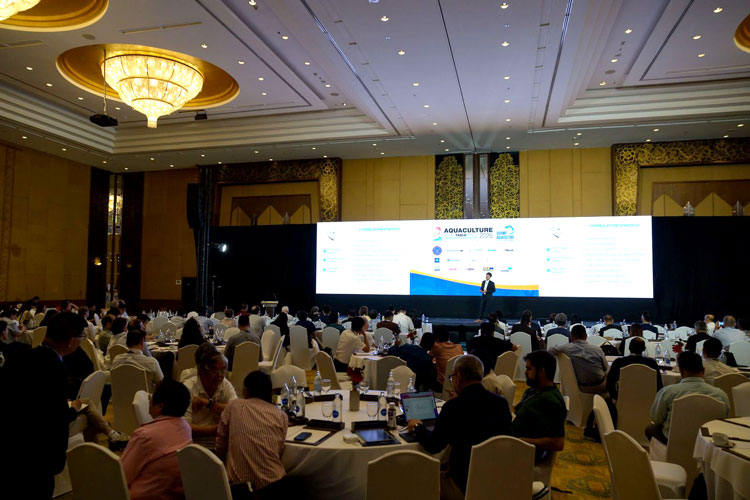
Key takeaways:
- While the Asian model is not broken but misunderstood, excessive intensification raises disease risk and undermines long-term sustainability in Asia.
- In Ecuador, vertical integration and process optimisation deliver efficiency and resilience. It is also seen as transitioning from selling a product to meeting a need.
- China is still considered a promising market for Asian producers, but current demand is shifting towards lower volumes and higher quality.
- Consumers increasingly demand sustainability and traceable, consistent, premium-quality seafood with no soaking, and that are antibiotic-free. E-commerce is becoming a key market channel.
- Success comes with adopting precision farming practices. Data-driven monitoring, strong biosecurity, and clear SOPs are critical to productivity and market alignment.
Participants learnt how Ecuador has a competitive shrimp industry by leveraging on its professionalism, promoting investments and brand development. It showed that sustainable growth is possible through scale, innovation, and integration. Ecuador’s distinct geography, politics, and business environments shape its unique model. The learnings from Asian producers on intensification are for Ecuador not to push the limits of carrying capacity. The message was not to see Ecuador as a competitor but to learn on its fundamentals in genetics, hatchery and nursery management and in production planning.
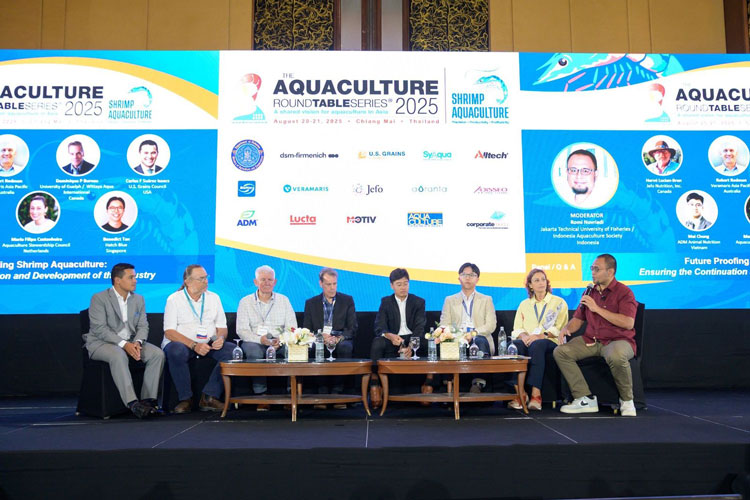
At Hard Talk, business leaders along the value chain from genetics, hatcheries, feeds in Asia and Latin America, and processing and marketing discussed shrimp aquaculture dysfunction in Asia. Asia’s fragmented system, with 70% of production from small farms, limits cooperation; meanwhile, Ecuador’s integrated model encourages collaboration between farmers and processors. Members agreed small farmers are resilient during challenges and stressed that increased collaboration — with added value tailored to target markets—is necessary, rather than full integration.
“For the long-term sustainability of the industry, it is the second generation of farmers who are stepping up, forming strong peer networks to support one another and driving the transition from founder-led enterprises to modern, science-driven shrimp farming businesses,” said Zuridah Merican, Chair of TARS and Editor of AquaCulture Asia Pacific.
At the pond side chat, second generation shrimp business leaders, Rizky Darmawan (Indonesia), Chodpipat Limlertwatee (Thailand), Hai Nguyen (Vietnam), and Mayank Sharma (India) showed how they are leading with science, technology, and resilience, ensuring continuity and growth for the industry.
The takeaways included:
- Family business succession requires balancing respect for tradition with openness to innovation, where younger generations must earn trust to take calculated risks.
- Integrated nursery systems present opportunities for efficiency but demands careful logistics, biosecurity, and seamless transfer protocols to avoid losses.
- Black tiger shrimp farming can be profitable with product segmentation targeting larger sizes and disciplined farm protocols to mitigate disease risks.
- Innovation and risk-taking should be framed as structured, data-driven pilots that complement existing practices, demonstrating value without undermining the stability of legacy operations.
The Interactive Roundtable Breakouts session focussed on precision shrimp aquaculture and the new deal. “We cannot improve on what we cannot measure. Delegates co-developed metrics for precision shrimp farming, reinforcing TARS’ hallmark of inclusive and solution-driven dialogue,” added Merican.
The technical sessions provided the following takeaways:
- Precision farming and production planning noted that genetics drive ~50% of performance, but hatchery management and robust post larvae delivery determine field success. Science-based SPF breeding programs remain the standard in Asia compared to Ecuador’s APE advances. Nursery systems improve survival, inventory control, and profitability, but transfer logistics are critical. Integrated systems are proving viable in Vietnam.
- Precision nutrition promoted the use of functional additives for gut health, immunity and health interventions. Awareness of negative effects of mycotoxins and endotoxins in shrimp production is critical. In terms of feed sustainability. fishmeal replacement with the same performance at the same cost is the goal. Independence from the marine ingredients in feeds is with non-animal-based sensory additives. Real-time monitoring and acoustic feeding, show promise but adoption varies by region and farm scale.
- Disease mitigation and control of transparent post larvae disease (TPD) in Vietnam requires modular biosecurity to reduce spread and functional additives. Lessons on Vibrio control also led to functional additives to support gut health, microbiome and immune modulation. Early disease diagnostics, multi-pathogen management and lower stocking densities remain key to reducing disease risk.
The future proofing session emphasised on how the retail sector is increasingly influencing shrimp farming practices, focusing on provenance and health benefits. In securing post-harvest product quality, time and temperature control and an optimized supply chain from producers to exporters are critical.
For a sustainable feed strategy, the industry requires lower crude protein feeds with high digestibility. Asia tends to use higher crude protein compared to Latam. There is big opportunity for growth with mathematical modelling to assess impacts of key factors, identifying solutions, formulating to reduce marine ingredient and no marine oils and more sustainable protein/energy levels.
TARS 2025 recognised the role of startups in advancing pond management, disease prevention, and climate adaptation – critical for farmers facing repeated crop failures.
Organizers, Aqua Research PL, publisher of Aqua Culture Asia Pacific and Corporate Media Services acknowledged the hard work, insights, and dedication of all the presenters, moderators, industry panellists, roundtable and group leaders who contributed to the success of TARS 2025.
TARS 2025 was made possible with the strong support of Thailand’s Department of Fisheries, along with industry partners including dsm-firmenich, U.S. Grains Council, Jefo Nutrition, Auranta, Adisseo, ADM, SyAqua, Alltech, BioMar, Veramaris, Lucta, and Motiv. See more details on the program at www.tarsaquaculture.com
As TARS continues to grow, it is helping shape a future where shrimp aquaculture is more resilient, efficient, and aligned with the needs of both producers and consumers worldwide.
TARS 2026 will focus on AQUAFEEDS and will be held August 19-20, 2026.
Media Contacts:
Zuridah Merican (zuridah@aquaasiapac.com) / Irene Gomez (irene@corpmediapl.com)
About TARS
The Aquaculture Roundtable Series® (TARS) started in 2011 to help the industry grow by sharing information and experiences. It brings together stakeholders from the public, private sector, academia, government, and non-government organizations to discuss and improve aquaculture sustainability. Over the last 13 years, TARS has focused on specific sectors: Aquafeeds (2011, 2015, 2019, 2022), Shrimp Aquaculture (2012, 2014, 2016, 2018, 2021, 2023), and Finfish Aquaculture (2013, 2017, 2024). More information is available at www.tarsaquaculture.com.
About the Organizers
AQUA CULTURE ASIA PACIFIC: AQUA Culture Asia Pacific (AAP) is a regional trade magazine focused on the aquaculture industry, available in print and online. It is published by Aqua Research PL six times a year since 2004. Founded by Zuridah Merican, AAP provides information about the regional aquaculture industry and serves as a platform for industry discussions and self-regulation. AAP strives to be the beacon the regional aquaculture industry, a window to the world for aquaculture producers in Asia Pacific, and the doorway to the market for international suppliers. www.aquaasiapac.com
CORPORATE MEDIA SERVICES: : An award-winning communications agency established in 1992 by Irene M Gomez, Corporate Media Services (CorpMedia) has more than 30 years of experience in marketing, public relations, publishing and event management. CorpMedia works with a diverse group of clients from corporate, government and nongovernment organizations, investment, hospitality, food, agriculture, health, science and technology sectors. CorpMedia strives to bring global perspectives to an ever-changing world of communication dynamics. In April 2025, CorpMedia launched cmXp2, a strategy services firm with deep marketing, communications, brand, engagement and advocacy expertise – designed to serve organizations operating in highly regulated sectors, namely life sciences, food & nutrition, agriculture & agri-food (including aquaculture), global banking & markets, corporate & institutional banking. www.corpmediapl.com