
Ca Mau ports step up controls to combat IUU and build traceable fisheries
As part of Vietnam’s broader push toward sustainable and traceable fisheries, Ca Mau province is tightening port controls to align with new national regulations and international expectations, including the European Commission’s anti-IUU (Illegal, Unreported, and Unregulated) fishing framework.

Under Decree 26/2019/ND-CP and the newly issued Decree 37/2024/ND-CP, all fishing vessels 15 meters or longer are now required to land at designated ports. This mandate is critical to enable inspection of vessel monitoring systems (VMS), updating of trip and catch data to the national VNFishbase system, and validation of legal catch documentation.
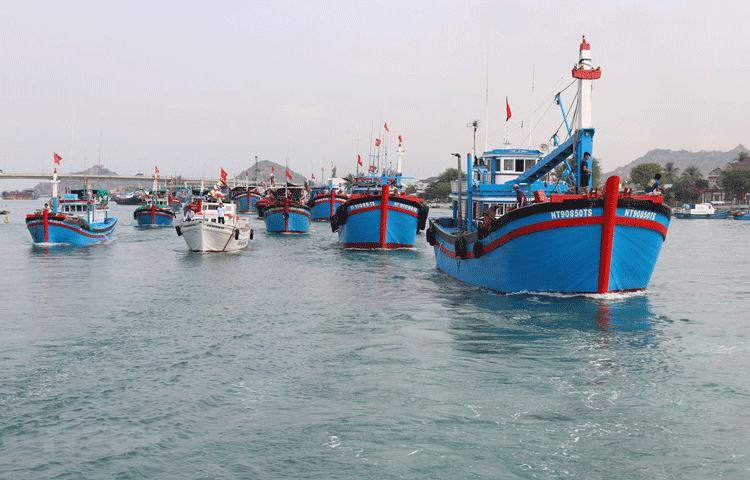
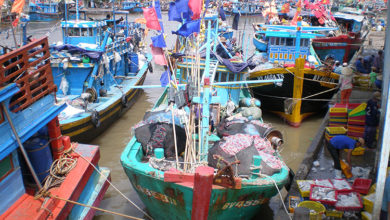
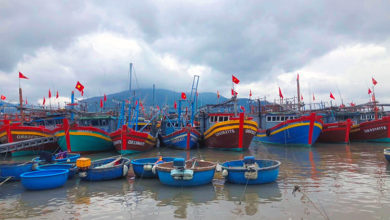
With over 5,280 fishing vessels, nearly 2,000 of which fall under the mandatory port-call category, Ca Mau has made port control a central governance priority. The provincial authorities have ramped up coordination among port staff, fisheries officers, and Border Guard forces to cross-check fishing logs, monitor real-time vessel positions, and implement the electronic catch documentation and traceability system (eCDT).
Three key ports, Song Doc, Rach Goc, and Ganh Hao, have been designated for offshore catch verification. In addition, all major estuaries are permanently staffed by Border Guard checkpoints, while mobile inspection teams cover smaller landing points. A centralized software platform now allows for integrated oversight, ensuring that 100% of vessels entering and leaving ports are jointly monitored by port officials, the provincial IUU task force, and Border Guard units.
Despite notable progress, infrastructure limitations are constraining efficiency. Current port facilities can handle just 350 vessels per day far below demand during peak periods, especially when boats return in mass during low tide. In some areas, such as Cai Doi Vam, rapid sedimentation has restricted access, with dredging delays further worsening the problem.
Poor road connectivity also hampers the transport of catch from landing sites to processing and distribution centers, creating logistical bottlenecks and increasing post-harvest losses.
To address these challenges, the provincial government has approved a comprehensive Fisheries Infrastructure Development Plan through 2030, with a strategic outlook to 2045. The roadmap includes the construction of 13 new fishing ports, one Class I, six Class II, and six Class III, designed to expand total annual handling capacity to 193,000 tons of seafood.
The plan also covers dredging of navigation channels and the development of safe anchorage zones to facilitate access, particularly during the monsoon season when vessel safety is most at risk.
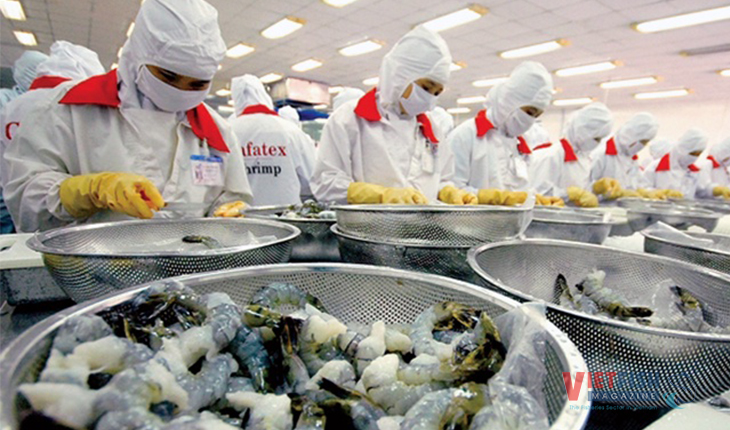
Once completed, Ca Mau’s upgraded port infrastructure is expected to lay the groundwork for a more sustainable, transparent, and export-ready marine fisheries sector. By improving traceability systems and aligning port management with international best practices, the province aims to meet the European Commission’s recommendations and contribute to lifting Vietnam’s “yellow card” warning.
“Port management is now at the heart of fisheries reform in Ca Mau. Our goal is not only to enforce the rules but also to support our fishers in accessing global markets,” a provincial fisheries officer said.
VFM